
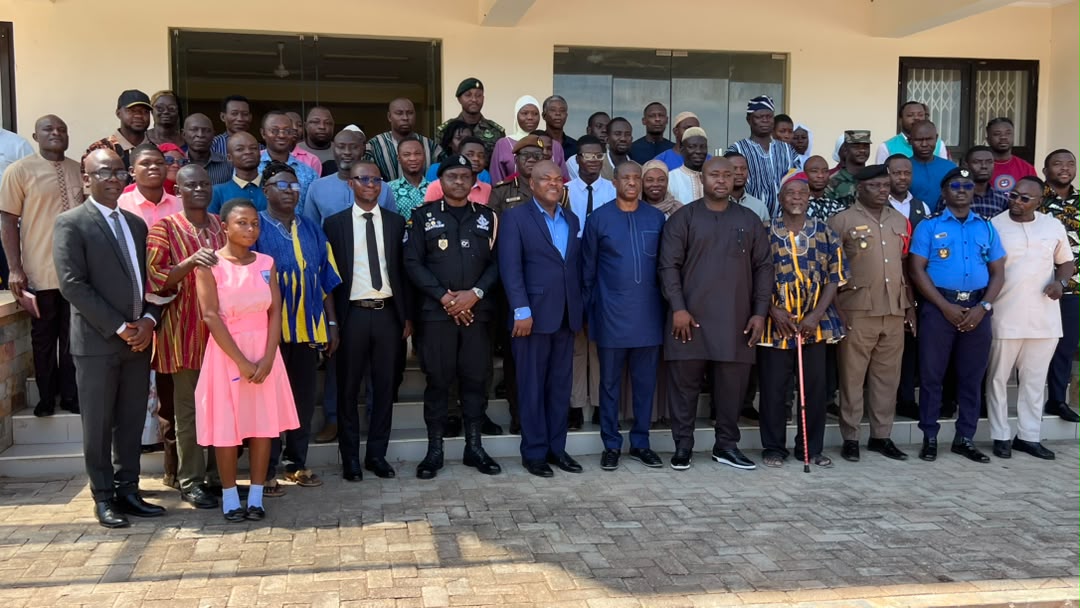

The National Security Council Secretariat (NSCS) has engaged stakeholders in the Savannah Region as part of efforts to review Ghana’s 2020 National Security Strategy to address emerging security threats and strengthen the country’s security architecture.
The regional stakeholder engagement was held on Thursday, November 5, 2026, in Damongo, bringing together traditional authorities, security agencies, religious leaders, political party representatives, civil society organisations, academia, youth groups, market women, transport operators and the media.

In his welcome address, the Savannah Regional Minister, Hon. Salisu Yussif Biawurbi, Esq., emphasised the need for a comprehensive review of the national security strategy, stressing that national security goes beyond the traditional activities of security agencies and encompasses virtually every aspect of national development.
He identified chieftaincy disputes, boundary conflicts, inter-communal tensions, artificial intelligence-generated misinformation, social media abuse and hate speech as emerging concerns requiring proactive attention.

The Regional Minister particularly called for the proper documentation and codification of traditional succession systems to prevent future chieftaincy disputes, urging national security institutions and other stakeholders to work closely with traditional authorities to safeguard the region’s relative peace and stability.
He also cited the misuse of artificial intelligence-generated photographs and videos during the Gbenyiri conflict as an example of how misinformation can inflame tensions and worsen security situations.

Speaking on behalf of the National Security Council Secretariat, its Director of Legal Affairs, George Loh, Esq, explained that the review was necessary to ensure Ghana’s national security framework responds effectively to changing security dynamics, particularly technological advancements and emerging threats.
He noted that the 2020 National Security Strategy was due for review and that the Secretariat was engaging stakeholders across all 16 regions to gather local perspectives and recommendations for a more comprehensive document.
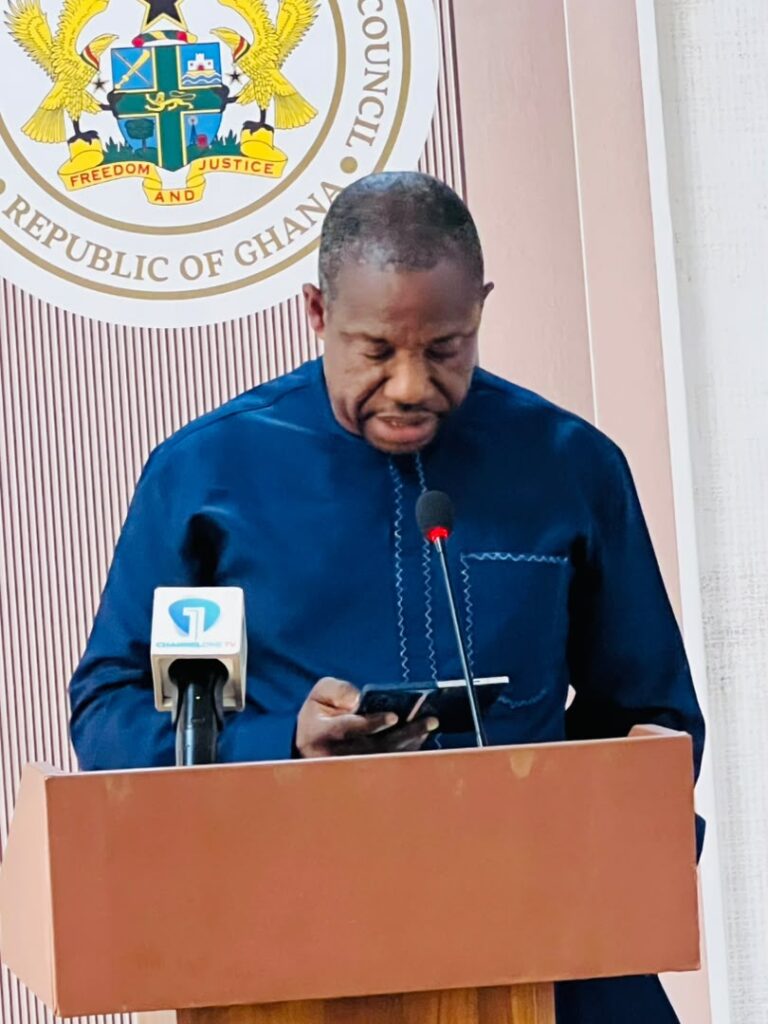
Mr. Loh stressed that the new approach seeks to place citizens at the centre of national security, emphasising that security is a shared responsibility and not the exclusive preserve of security agencies.
He explained that contributions gathered from the regional engagements would be assessed by a review committee and incorporated where relevant into the revised strategy before it is submitted to the appropriate authorities for approval and adoption.
The review is being undertaken in line with the Security and Intelligence Agencies Act, 2026 (Act 1168), which provides an updated legal framework for national security coordination.

The engagement forms part of a broader nationwide consultation aimed at developing a forward-looking National Security Strategy that addresses emerging challenges, strengthens institutional collaboration and promotes proactive threat prevention.
The NSCS has clarified that the review is a statutory and proactive governance exercise and should not be interpreted as an indication that Ghana is facing an immediate national security crisis.
Source: Padfm.com.gh/Kumatey Gorden/0243531604