
By Edwin Gogu
IFOAM – Organics International has called on Ghana’s government to introduce dedicated policies, allocate funding and strengthen institutional support for agroecology and organic agriculture to accelerate the transition towards a more sustainable food system.
The organisation says although Ghana is making efforts to promote sustainable agricultural practices, stronger government commitment is needed to translate existing initiatives into practical programmes that can benefit farmers, communities and the wider economy.
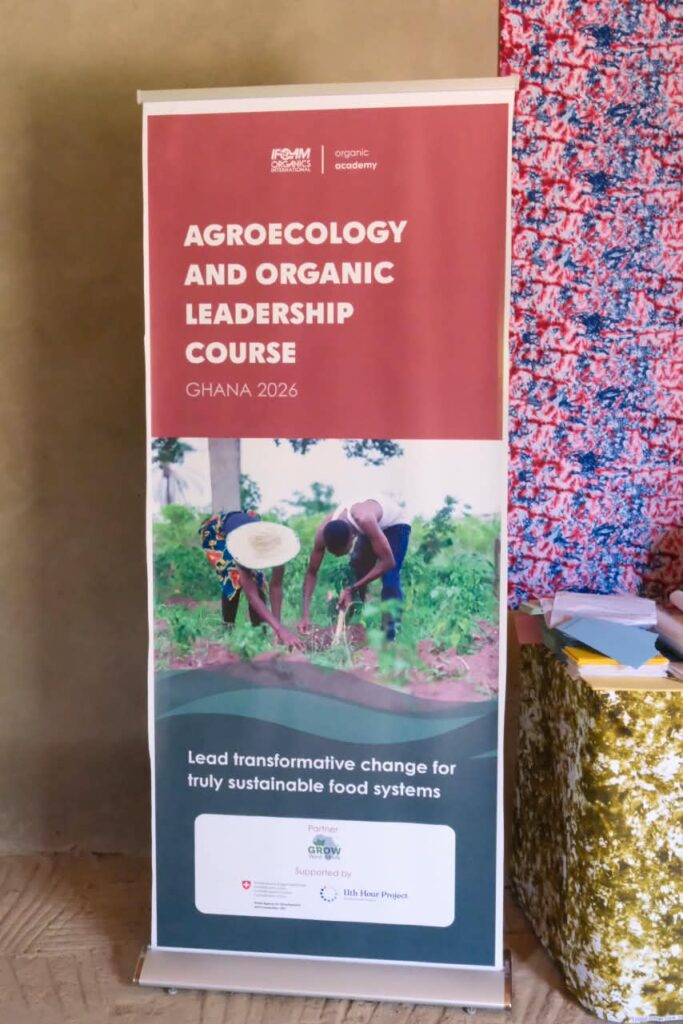
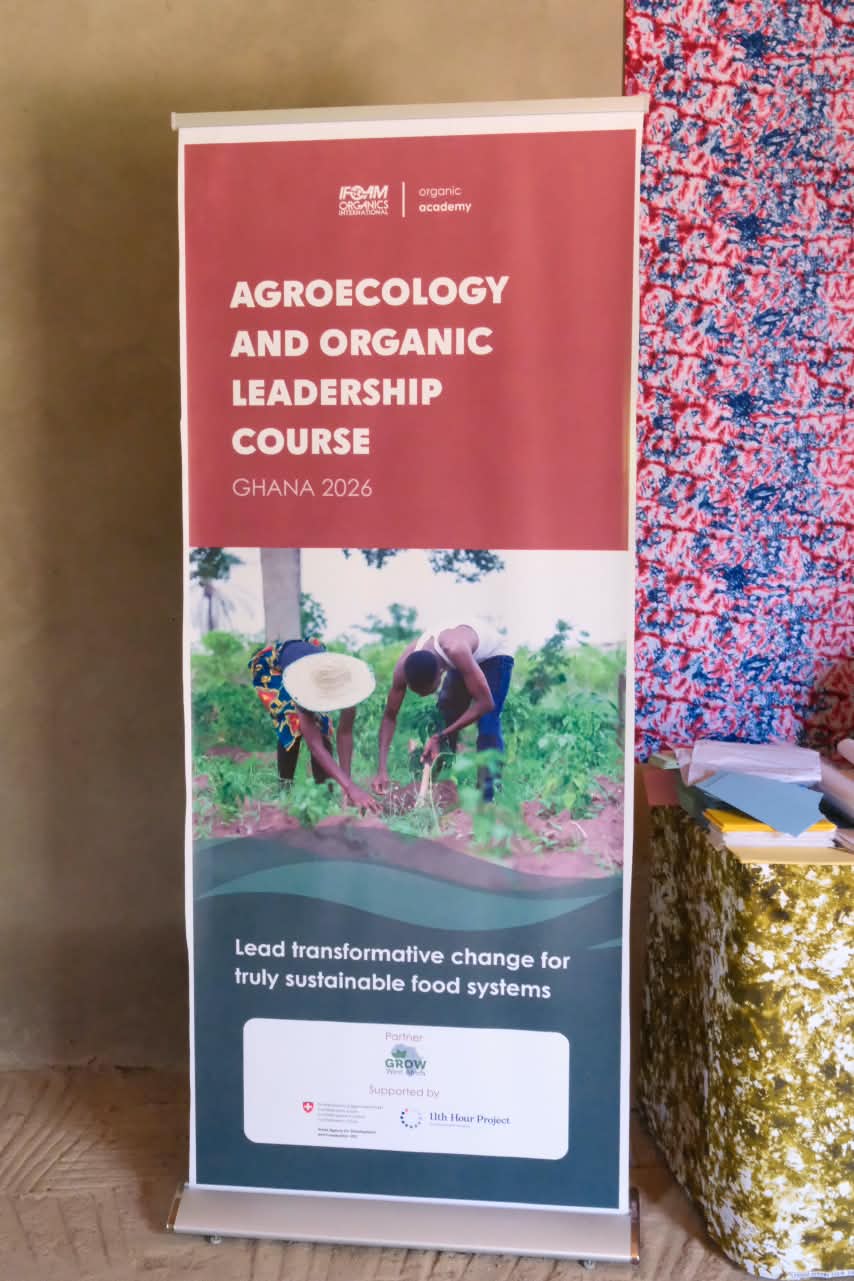
Patricia Flores, Senior Manager of the Global Academy at IFOAM – Organics International, made the call during an interview on the organisation’s support for the Agroecology and Organic Leadership Course being implemented in Ghana by Grow West Africa.
She said local and national governments must make the growing interest in agroecology more visible through concrete policies and adequately funded programmes.
“We expect that local governments, the national government also, can give the right support to these kind of initiatives,” she said. “We expect that they make more visible all these efforts coming from so many people around in Ghana, that they have a lot of expectations also that it will turn in public policies with concrete programs, with allocated funds that will allow us to trigger transition in this beautiful country.”
Patricia explained that IFOAM – Organics International was supporting the programme through its Agroecology Promotion Programme, funded by the Swiss Agency for Development and Cooperation, with interventions prioritised in Sub-Saharan Africa and Southeast Asia.
The Ghanaian course, implemented in partnership with GROW West Africa, is the second cohort of agroecology and organic leadership training in the country. It brings together 26 participants from different sectors and professional backgrounds for a seven-month programme.
According to Patricia, the participants are expected to become agents of change in their communities, workplaces and other spaces where they engage.
She said the programme was designed to move beyond theoretical discussions by equipping participants to develop practical plans that could contribute to transforming the country’s food system.
“We are very impressed with the quality of the engagement of all participants in this cohort. I also appreciate a lot the diversity of them. They are coming from different sectors, different backgrounds, different roles, positions, and that also is important for the course because there is a lot of peer learning,” she said.
Patricia said agroecology should not be understood only as an agricultural production method, but as a broader approach that connects environmental protection, social development and the entire food system.
She explained that it considers how food is produced, processed, distributed and consumed, while also seeking to improve access to quality food and promote fairer relationships for farmers.
She said the approach could help governments, farmers’ organisations, consumers and other stakeholders rethink existing food systems and work towards achieving the Sustainable Development Goals.
“Agroecology and its multidimensionality is helping different governments, also different farmers around the world, farmers’ organisations, consumers, also organisations that are willing to change how food is produced, consumed, processed, distributed,” she said.
Patricia added that agroecology places particular importance on the social and ecological dimensions of agriculture, recognising that food production cannot be separated from the wellbeing of communities and the environment.
Addressing concerns that agroecology is difficult to practise, time-consuming or unsuitable for commercial farming, Patricia said meaningful transformation requires commitment and sustained efforts from different stakeholders.
She argued that systems built on agroecological principles were intended to deliver lasting benefits rather than short-term gains that could have negative environmental and social consequences.
“The best things in life we get with a lot of efforts. I mean, easy things are also easy to destroy or easy to have a negative impact in the environment, in the social aspect, and so on,” she said.
On commercialisation, she rejected the perception that agroecology could not support large-scale food production. She maintained that agroecological farming systems had demonstrated their potential in different parts of the world, across small-, medium- and large-scale farms.
“Agroecology also has proved all over around the world, in the North Hemisphere, in the South Hemisphere, small, large, medium-scale farming systems, that it can feed the world, that it can be commercialized,” she said.
She further argued that agroecological systems could strengthen resilience against climate shocks and unpredictable conditions, while creating opportunities for fairer commercial relationships, particularly for smallholder farmers.
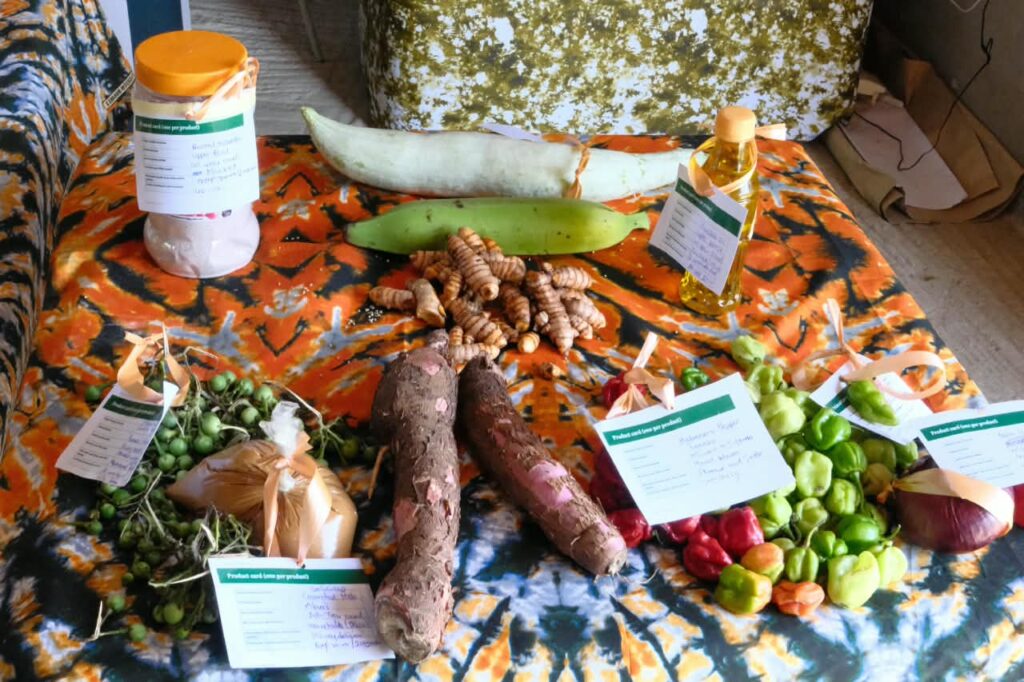
Patricia said commercialisation should be part of the strategy for building a stronger and more equitable agroecological economy.
IFOAM – Organics International is a Germany-based global network founded in 1972 by farmers. It brings together approximately 500 member organisations across five continents, including farmers’ organisations, research institutions, universities and private companies working to promote organic agriculture and agroecology.
Through its Global Academy and other programmes, the organisation supports capacity building and the promotion of sustainable agricultural approaches in different countries.
Patricia said Ghana offered a favourable context for the leadership course because of the commitment of local partners and their efforts to mobilise additional resources to make the programme possible.
She expressed hope that the training would be replicated and that the development plans produced by participants would generate practical results to support Ghana’s transition towards a more sustainable food system.