
THE HIGH COST OF POLITICAL FANATICISM

𝘉𝘺: 𝘑𝘰𝘩𝘢𝘯𝘯𝘦𝘴 𝘑𝘢𝘧𝘰 𝘈𝘬𝘶𝘯𝘢𝘵𝘶 [0247019099; 𝘢𝘬𝘫𝘢𝘧𝘰@𝘨𝘮𝘢𝘪𝘭.𝘤𝘰𝘮]
Politics breeds loyal followers in each and every generation. It’s not loyalty per se that is a problem. In fact, democracy flourishes when the people are involved in public life, stand up for their values and demand the answerability of leaders. The issue occurs when loyalty forsakes reason and turns to character assassination and hostility. The difficulty comes when supporters turn to warriors, while those that they are fighting for remain friends.
This harsh reality has just been vividly exposed again in recent events and debates in the Damongo Constituency. Insults, character assassination, threats and in some cases violence have taken over political discussions. The ones who are not the highest office holders, or those who have gone to the table of decision, or who have any particular interest in the political wrangling, have been the keener fighters in the strife to which they are not called.
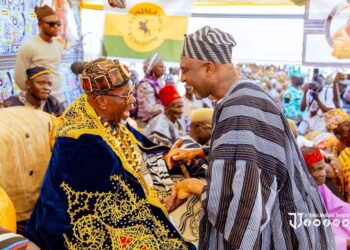
It’s not an easy thing to miss the irony. The politicians involved in these exchanges frequently have good relations with each other. They go together to public events. They exchange pleasantries. They occupy the same platforms in national occasions. They share meals. They know politics isn’t an ongoing declaration of hostility, it is a battle of ideas.
But some of their adherents act as if opposition to the political views is a justification to hate or insult. This is not peculiar to Damongo. It is increasingly becoming a problem in Ghana’s political space.
Social media has provided every citizen with a microphone. Unfortunately, too many have mistaken volume for influence and insults for political engagement. The generation that should be using digital platforms to call for development, accountability, education, healthcare, jobs and infrastructure are increasingly using these same platforms to create political enemies and deepen divisions.
When political participation becomes a platform for personal attacks and endless insults, it becomes devoid of moral purpose. In a democracy, the role of the youth is not to defame politicians, poke fun at their character or attack their personalities. They have a far bigger responsibility. It is to hold leaders and decision makers accountable, to challenge decisions, to question policies, to challenge leaders on issues that impact the lives of the people. Focusing on attacks is a sign of a lack of focus on ideas. Political discussion should not be about any politician’s personal life or appearance. Their promises, policies, records and vision are what deserve public scrutiny. Democracy thrives when citizens challenge and hold leaders to account. When insults take the place of debate, reason is lost in emotion. Criticism to governance can be constructive and helpful, but when it is personal abuse it only deepens the divisions and distracts from the real issues that impact on the people.
It’s not just social media that’s being harmed. When supporters of the political party spend their energies attacking one another, communities become divided. Friendships suffer. Families become strained. Business relationships deteriorate. The endless political feuds overshadow development discussions. The constituency becomes distracted from what matters and begins to lose interest.
A question that should be asked by the young people of Damongo is; How many roads have been paved with insults? How many jobs have been created due to insults and character assassination?
The answer is obvious. Development does not emerge from bitterness. Progress is not built on personal attacks. Communities advance when citizens engage constructively and demand solutions rather than conflicts.
History provides lessons of importance. The competitiveness of some of the world’s most successful democracies is that political opposition acknowledges one fact: The opposition of the present day is the ally of the next. Power shift is inevitable. Governments changes. Elections come and go. Political fortunes rise and fall. But communities remain. People and relationship remains.
Ghana’s democratic journey has been a model to be emulated across Africa because political competition has, in general, remained peaceful and constitutional. The country has seen some intense electoral battles, but leaders from different parties have shown respect for one another and a commitment to national stability in a number of instances. That’s a lesson for the youth.
Voting for a political candidate should not be based on insulting another candidate. It is never proper to tell lies in the defence of a political party. Loyalty does not require unquestioning obedience. Political maturity is to be loyal to the candidate of one’s choice, while honoring the humanity and dignity of one who is not.
Damongo has a rich history, culture and political consciousness. It has nurtured leaders, professionals and public servants who have made significant contribution to national development. Such a constituency should be remembered for its good discussions, not for their political vitriol.
Who wins an argument on TikTok doesn’t make any difference to the future of Damongo. It will depend on the leadership, strength of institutions, opportunities to its youth, and openness to the people to cooperate despite political differences.
All young people who wants to step into politics have to make a choice. Will they be builders or destroyers? Will their words unite or divide? Will they raise the level of public conversation or sink it in the mire? The answers to these questions will define the destiny of not just Damongo but of Ghana’s democracy.
Political leaders will still be meeting and shaking hands, exchanging courtesies long after Election Campaigns are over. They need to keep this in mind when they start to make political enmity a personal war.
After all, Politics fades but community is permanent. No political gain is worth the price of destroying the peace between the people.