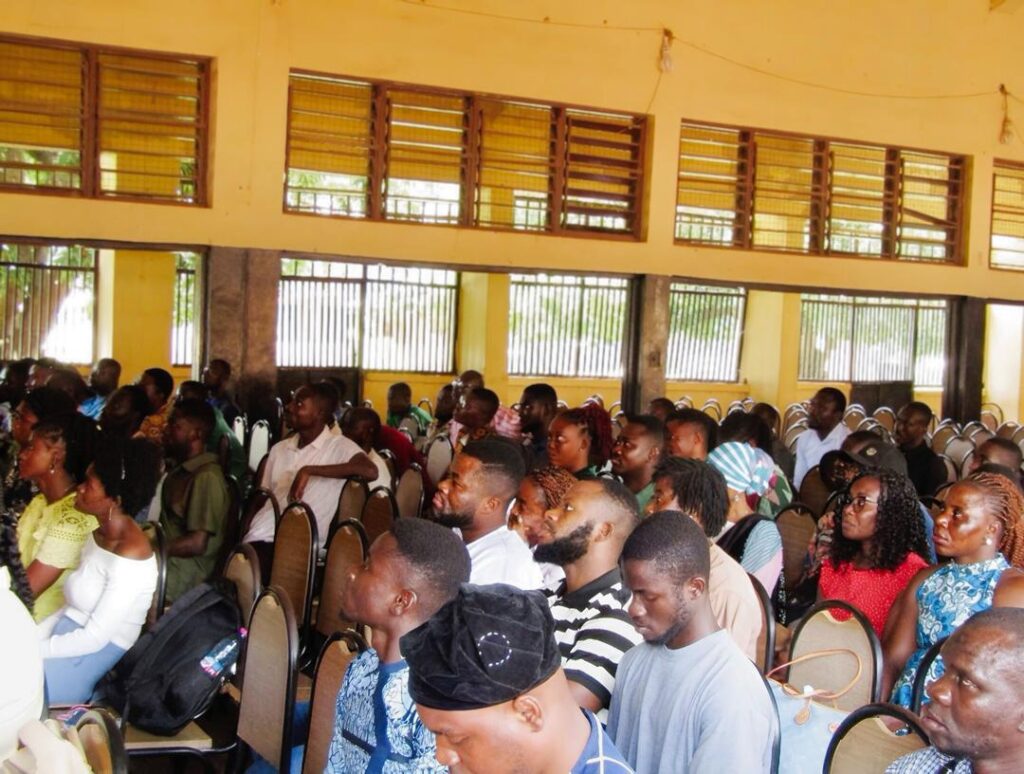
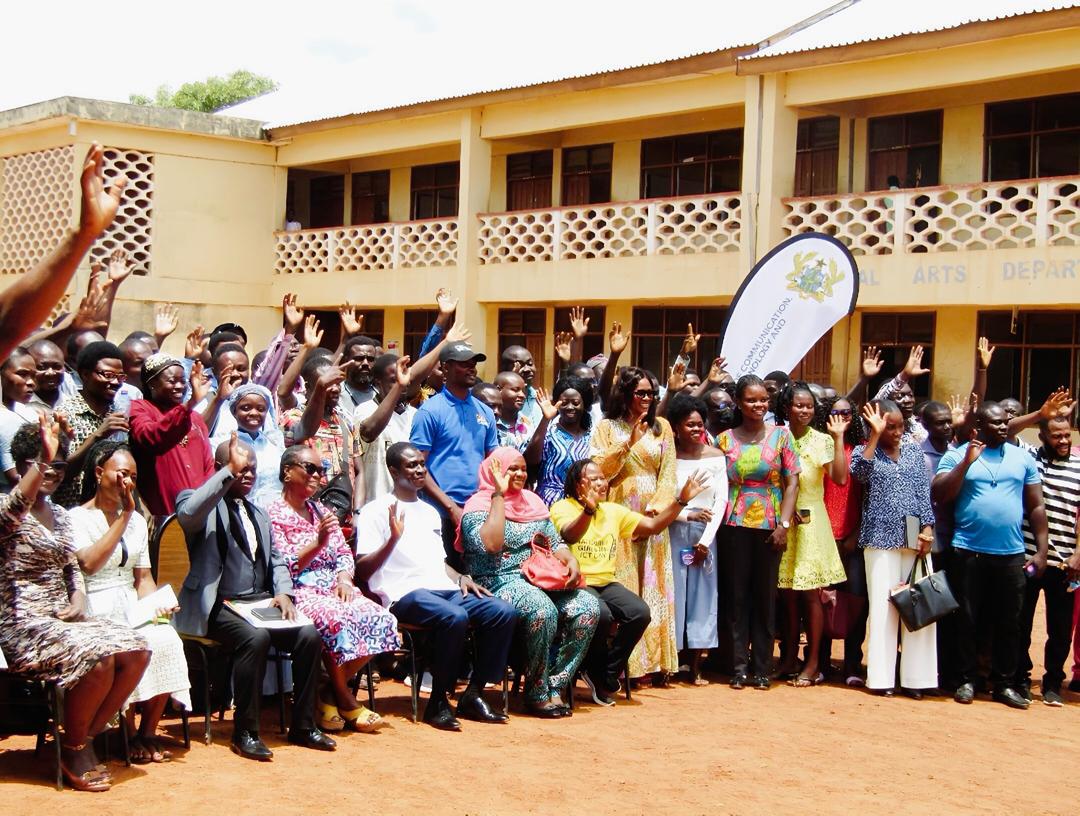

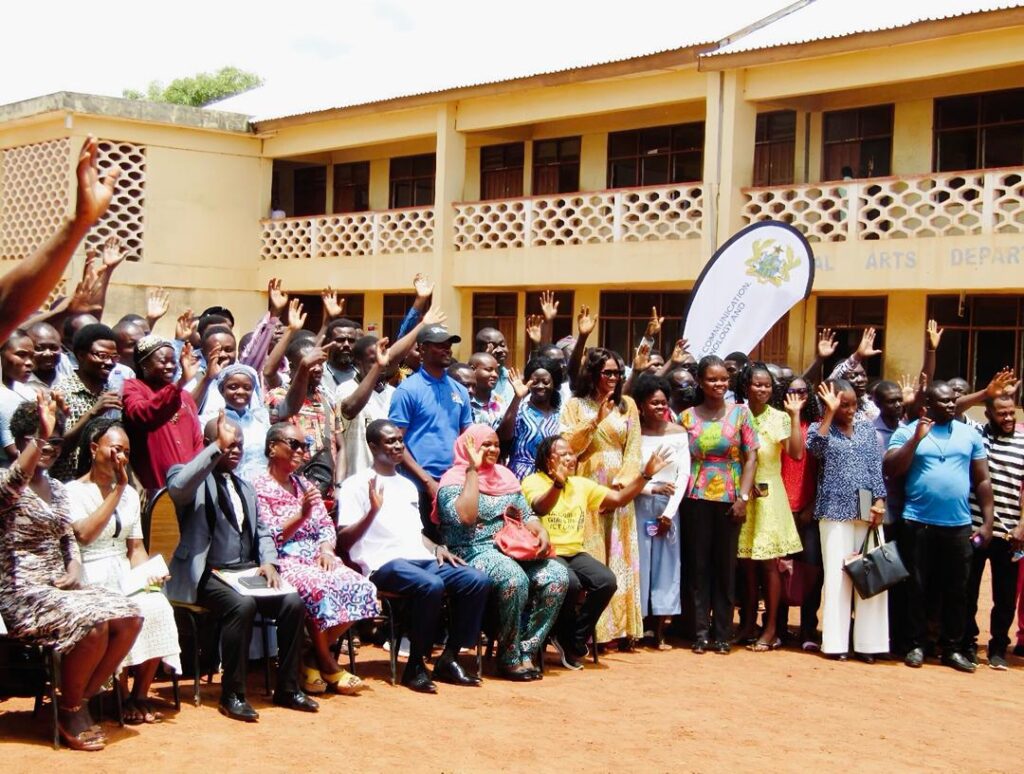
The Ministry of Communications, Digital Technology and Innovation, in collaboration with the Savannah Regional Coordinating Council, today September 15, 2025, at the Damongo Senior High School launched a week-long Training of Trainers (ToT) for 100 ICT teachers drawn from across the Savannah Region. The ToT is part of the national Girls in ICT initiative and is designed to equip teachers with the technical skills and teaching methodologies they will use to train girls in their districts ahead of regional mentorship and national climax events later in October.
The Savannah Regional Coordinating Director, Mr. Ebenezer Amoah, opened the programme on behalf of the Regional Minister, thanked teachers for their role in national development. He reminded participants how teachers shape lives sharing a personal story about his own teacher and urged them to see the ToT as a serious, purpose-driven assignment rather than an opportunity for allowances. As he put it: “If it must be done, it must be done well.”
Mr. Amoah stressed that Savannah must perform strongly among the 16 regions taking part in the second round of the national programme. He outlined the short timeframe and practical focus of the ToT fundamentals of programming, an introduction to Scratch and website creation and called on teachers to convert logistical challenges (accommodation, venue discomfort) into opportunities to deliver excellent training so that Savannah’s girls shine at the regional and national competitions scheduled for the end of October.
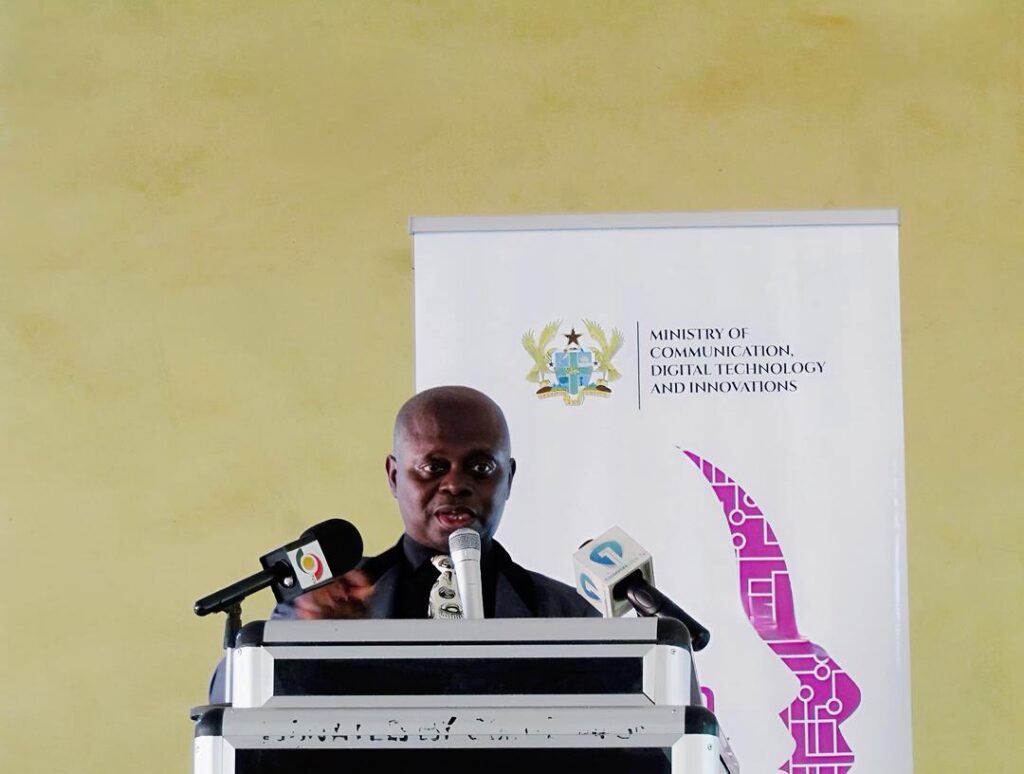
Mr. Amoah, said the programme marks a turning point in bridging the gender digital divide in the region. He urged the participating teachers to take the training seriously and ensure that the knowledge and skills gained are transferred effectively to the girls under their care. “The future is digital, and empowering our young girls with ICT skills is one of the most important investments we can make as a region and as a country,” he emphasized.
Mr. Austin Hesse, Director, Policy Planning, Budgeting, Monitoring & Evaluation at the Ministry of Communication, Digital Technology and Innovation speaking on behalf of the Minister of communication, framed the ToT within Ghana’s wider digital transformation agenda. He referenced global evidence (the ITU) on the power of digital technologies for sustainable development and highlighted the persistent digital gender gap, citing figures to stress the urgency of the Girls in ICT programme. He also pointed to government efforts such as national coder training and other capacity-building initiatives aimed at turning youth from consumers into creators in the digital economy.
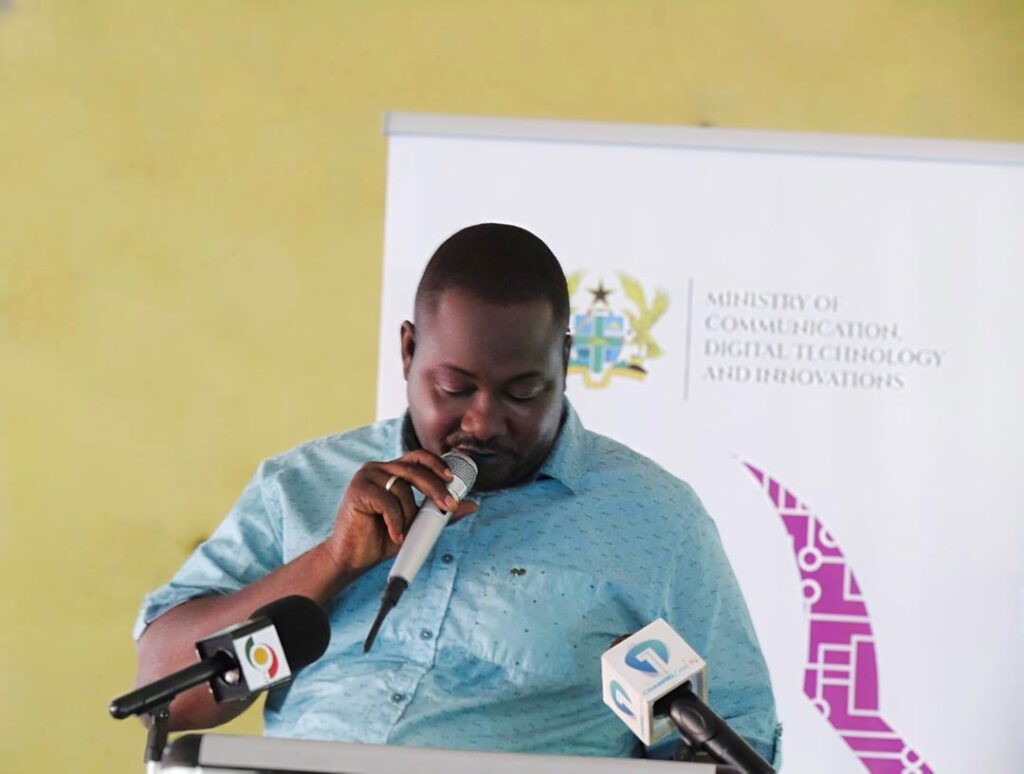
Detailing the scale and intended impact of the national programme, Mr. Hesse said that to date 15,981 girls and 1,292 teachers have been trained and outlined the next steps for Savannah: after the ToT the 100 teachers will train 1,000 girls drawn from constituencies in the region, followed by a mentorship event scheduled for 27 October 2025 and a climax awards ceremony on 28 October 2025. He further explained the tangible rewards planned for outstanding performers certificates, laptops, cash prizes and support to improve school computer labs and thanked partners and sponsors, including GIFEC, the Kofi Annan Centre of Excellence, MTN and American Towers Corporation, for their support.
Madam Sheila Auther, Deputy Savannah Regional Director of Education spoke as a fellow educationist and emphasized the teachers’ pivotal role as facilitators and mentors. She reminded participants that many of the girls they will train come from rural homes where electricity, laptops and even experience with mobile phones or a computer mouse may be absent. “Not all the girls even have seen a mobile phone… Some haven’t even touched a mouse before,” she said, urging trainers to be patient, practical and creative in their teaching.
Madam Sheila thanked the Ministry and partners for bringing the programme to Savannah and encouraged teachers to take the week seriously both to learn and to prepare to pass knowledge on. She called on participants to use their new skills to cultivate a culture of digital empowerment across schools and communities so that girls can “see the world through ICT.”
Mr. Prince Shaibu Bawah, Head of Training, GIFEC clarified GIFEC’s mandate and the agency’s commitments to the programme, stressing that GIFEC is dedicated to electronic communication development not a microfinance entity. He announced concrete resource and incentive packages: GIFEC will supply computers and support training centres, upgrade or replenish existing school labs, and reward excellence at the end of the programme.
On incentives, Mr. Bawah confirmed that the top 100 girls will each receive laptops and that the top three performers will receive cash awards (GHS 3,500, 3,000, and 2,500 respectively). He made it clear that teacher recognition and student awards will be merit-based: “There will be no lobbying. You only get the award when you put in your best,” he said. He closed by urging all stakeholders to work together to empower girls to pursue careers in technology.
The event in Damongo brought together regional and national officials, education leaders, GIFEC representatives and development partners, all pledging to support the drive to close the digital gender gap in the Savannah Region and to position girls from the region for national recognition in ICT and STEM fields.