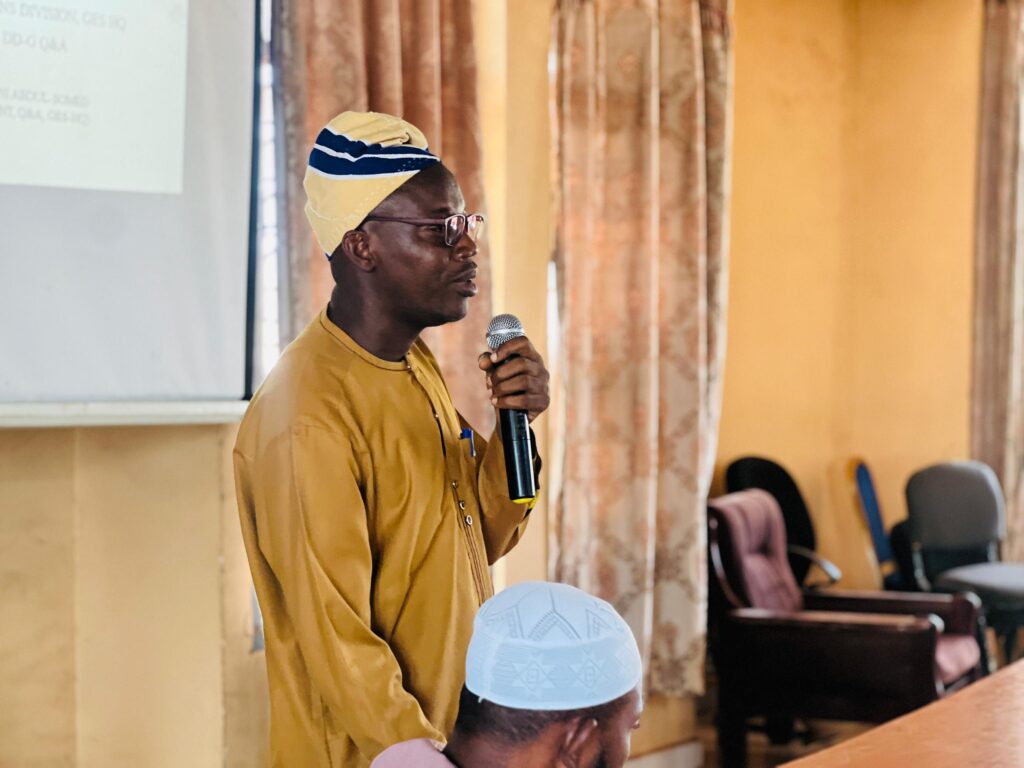


The Northern Regional Education Directorate has held a high-level stakeholders’ forum as part of a nationwide campaign to combat examination malpractice, a growing concern threatening the credibility and future of Ghana’s educational system.
Addressing participants at the forum, the Regional Education Director Me. Alidu Alhassan Jnr.delivered a strong caution on the long-term consequences of dishonest examination practices. He emphasized that malpractice goes beyond merely breaking rules—it undermines the very foundation of personal development and national progress.

“When learners engage in dishonest examination practices, they are not only cheating the system; they are compromising their own future, weakening national development, and creating a generation that may lack the competence, discipline, and ethical values necessary for nation-building,” he stated.
He expressed appreciation to all stakeholders present, commending their dedication and urging a united front in protecting the integrity and credibility of Ghana’s education system.
According to him, examination malpractice remains one of the most dangerous threats confronting the sector today, with far-reaching implications for both individuals and the nation at large.
The Director noted that malpractice devalues academic certificates, erodes public trust in educational institutions, and weakens the moral fabric of society.
He warned that if left unchecked, it could produce graduates who lack the knowledge and skills required to contribute meaningfully to national development.
The forum highlighted several consequences of examination malpractice, including the production of unqualified graduates, the erosion of confidence in Ghanaian qualifications both locally and internationally, the promotion of corruption and dishonesty, and the unfair disadvantage imposed on hardworking students.
Ultimately, such practices threaten the country’s productivity and global competitiveness.
Participants were reminded that the responsibility of addressing this challenge does not rest solely with educational authorities. Instead, it requires a collective effort from all sectors of society.
Parents were urged to instill values of honesty, discipline, and hard work in their children, rather than pressuring them to achieve success at any cost.
Teachers and school administrators were called upon to uphold professionalism, ensure adequate preparation of students, and resist any involvement in malpractice.
Students themselves were encouraged to embrace integrity, recognizing that genuine success is built on diligence and honest effort, not shortcuts. Religious and traditional leaders were also tasked with reinforcing moral values within communities, while security agencies were urged to strictly enforce examination laws.
The media, too, was identified as a key partner in the campaign, with a responsibility to educate the public and raise awareness about the dangers and consequences of examination malpractice.
As part of the way forward, stakeholders agreed on the need to intensify public education, strengthen supervision during examinations, promote ethical values in schools, and improve teaching and learning environments.
They also called for the strict enforcement of sanctions against offenders, alongside the expansion of counselling and mentorship programmes for students.
The forum concluded with a renewed commitment from all participants to work collaboratively in preserving the sanctity of Ghana’s educational system. The campaign, they emphasized, is not only about preventing malpractice but also about safeguarding the dignity of national certificates and securing the future of the country.
With a unified voice, stakeholders affirmed their determination: together, they can defeat examination malpractice, restore confidence in the education system, and build a brighter future for Ghana.