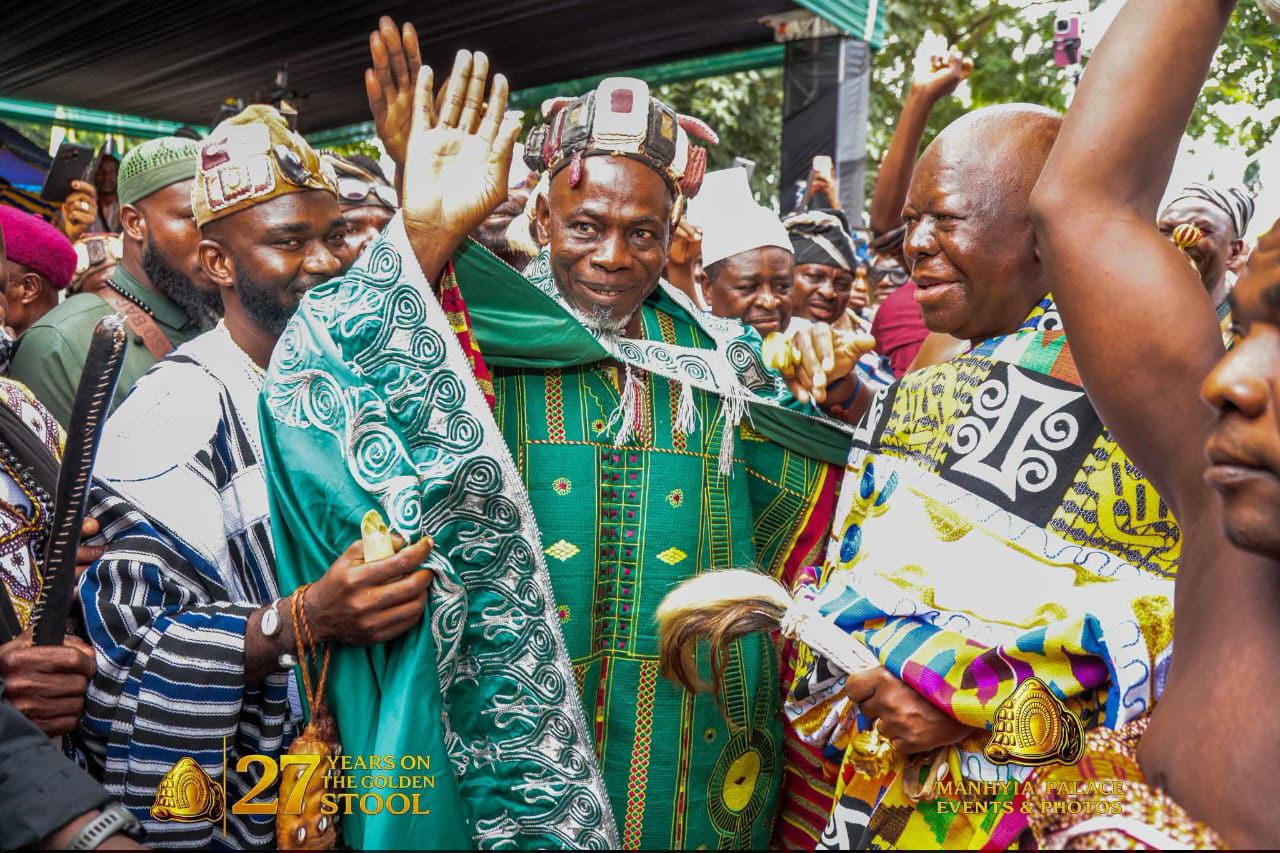

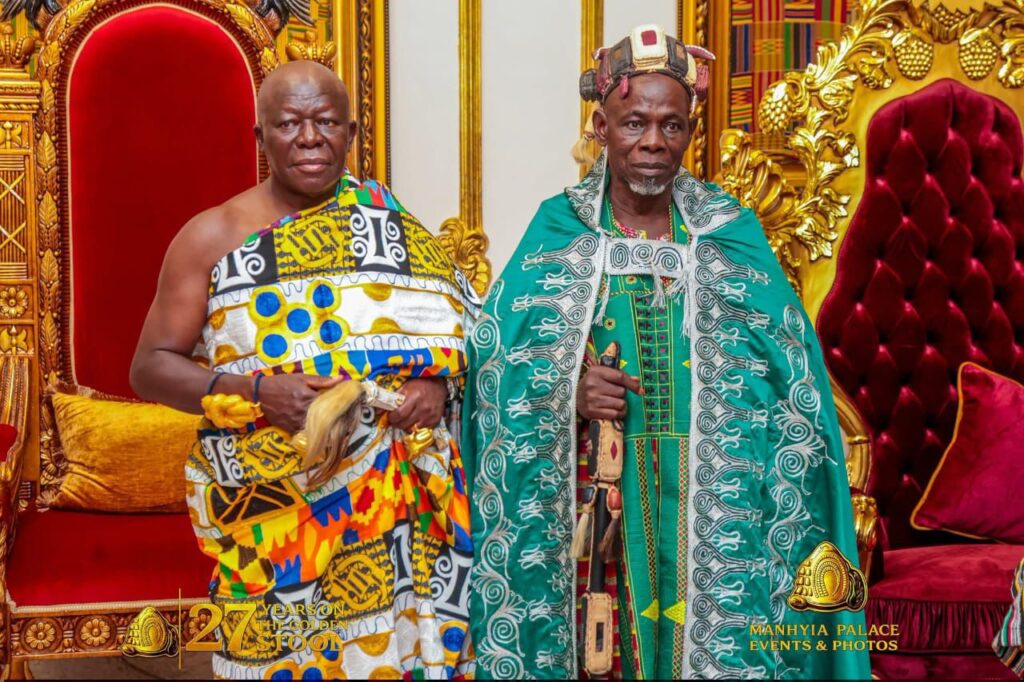
The King and Overlord of the Gonja Kingdom, Yagbonwura Bii-Kunuto Jewu Soale I, has reaffirmed the centuries-old bond between the Gonja and Ashanti kingdoms, calling for deeper collaboration, national unity, and stronger traditional leadership during a historic courtesy visit to Otumfuo Osei Tutu II at the Manhyia Palace.
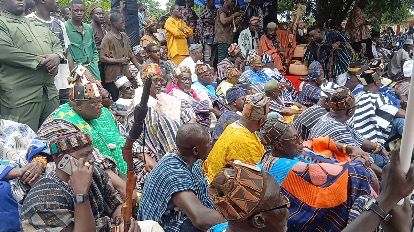
The visit, which coincided with the celebration of the Awukudae Festival on Wednesday, July 1, 2026, brought together traditional leaders, government officials, Members of Parliament, religious leaders, and other dignitaries to celebrate the enduring relationship between two of Ghana’s most influential traditional kingdoms.
Addressing the gathering, Yagbonwura Bii-Kunuto Jewu Soale I described the occasion as more than a ceremonial visit, calling it “a reunion of two great Royal Houses whose destinies have been connected for more than three centuries.”
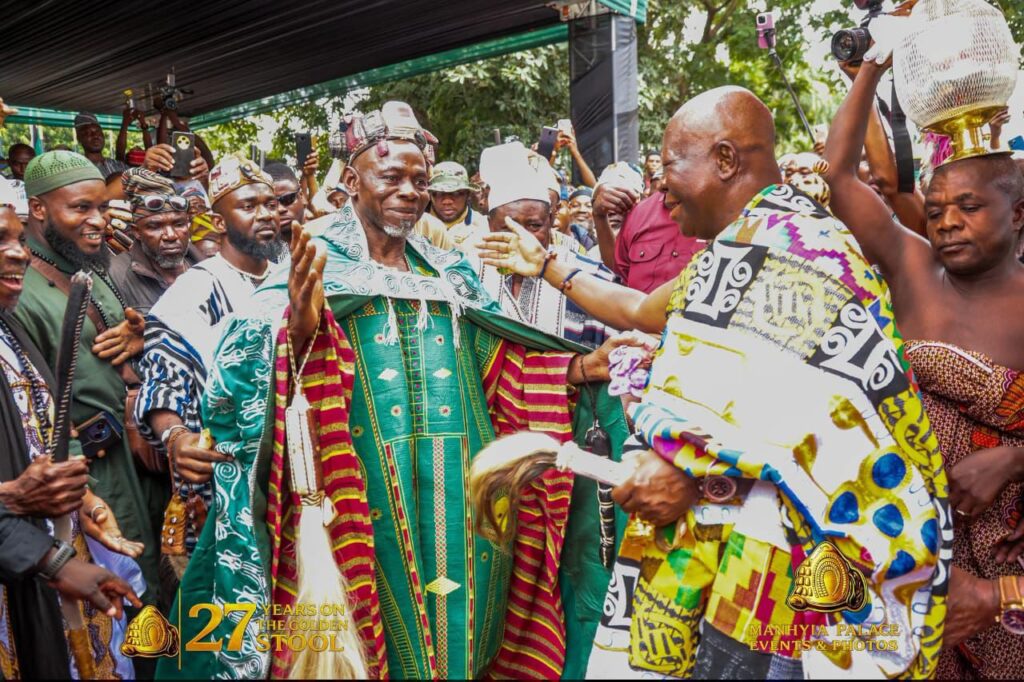
He said the visit reflected his commitment to strengthening the ancient kinship between the Gonja and Ashanti kingdoms, popularly referred to as ntafor, while promoting cooperation that would improve the lives of their people.
The Gonja Overlord praised the Asantehene for preserving the rich cultural traditions of Ashanteman and congratulated him on the celebration of the Awukudae Festival, noting that such cultural events remain essential in safeguarding Ghana’s heritage, promoting tourism, and driving socio-economic development.
Tracing the historical relationship between the two kingdoms, the Yagbonwura recalled that the Gonja Kingdom, founded by the legendary Ndewura Jakpa, and the Ashanti Kingdom under Osei Tutu I were among the most organised and powerful African states before the emergence of modern Ghana.
He explained that centuries of trade through Salaga, Kintampo, Techiman and Kumasi fostered economic prosperity and strengthened diplomatic and cultural ties between the two kingdoms, with Gonja merchants supplying livestock, salt, shea butter, leather goods and smock cloth, while Ashanti traders exchanged gold, kola nuts and later manufactured goods.
While acknowledging the shared prosperity created by the historic trade routes, the Yagbonwura also reflected on the devastating legacy of the trans-Atlantic slave trade and commended John Dramani Mahama for championing international calls for reparations and the restoration of dignity to people of African descent in the diaspora.
He further highlighted the significant role Muslim scholars from the Gonja Kingdom played in the Ashanti royal court, where they provided spiritual guidance, Islamic scholarship and counsel, describing the relationship as one built not only on commerce but also on faith, mutual respect and intellectual exchange.
Although the two kingdoms experienced periods of conflict in history, particularly during the reign of Opoku Ware I, the Gonja ruler noted that their forefathers ultimately embraced diplomacy and peaceful coexistence, demonstrating that lasting greatness is achieved through reconciliation rather than perpetual conflict.
Turning to contemporary national issues, Yagbonwura Bii-Kunuto Jewu Soale I urged traditional leaders across Ghana to demonstrate the continued relevance of the chieftaincy institution by championing development and improving the welfare of their communities.
He praised the Asantehene’s widely acclaimed contribution to national peacebuilding, particularly his leadership role in resolving the Dagbon Chieftaincy dispute, describing it as a shining example of statesmanship and visionary traditional leadership.
The Gonja Overlord also expressed concern over the increasing incidence of land disputes and succession conflicts affecting traditional areas across the country.
He called for closer collaboration between the Gonja and Ashanti kingdoms to share best practices in land administration, conflict resolution and customary governance, stressing that dialogue, mediation and respect for customary laws remain the most effective tools for maintaining peace and stability.
The Yagbonwura further appealed to the Government of Ghana to provide greater support to the Regional Houses of Chiefs and the National House of Chiefs to facilitate the codification and documentation of customary laws, family lineages, skins, stools and succession arrangements.
According to him, proper documentation would significantly reduce chieftaincy disputes, ensure orderly succession and strengthen the institution of traditional leadership.
He concluded by expressing profound appreciation to the Asantehene for the warm reception and reaffirmed the Gonja Kingdom’s commitment to preserving the historic friendship between the two royal houses.
“May the Almighty Allah continue to strengthen the unity between the Gonja Kingdom and the Ashanti Kingdom,” the Yagbonwura prayed, as both kingdoms pledged to deepen cooperation for peace, development and national cohesion.
Source: Padfm.com.gh/Kumatey Gorden/0243531604