
Innovative ideas, scientific creativity and a shared commitment to environmental sustainability took center stage in Damongo as students from Catholic Senior High Schools and Technical/Vocational institutions across Northern Ghana competed in the 2026 Northern Zone National STEM Plastic Waste Management Competition.
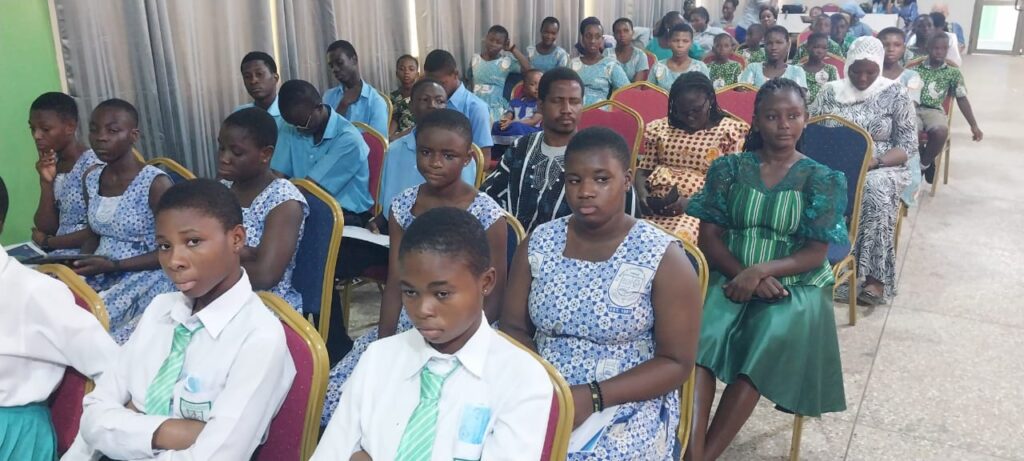
The competition, held at the Catholic Unity Centre in Damongo, was organized by the Catholic Education Unit under the auspices of the Ghana Catholic Bishops’ Conference in partnership with Konrad Adenauer Stiftung (KAS). The initiative aims to promote STEM-based solutions to plastic waste management while nurturing innovation, creativity and entrepreneurship among Ghanaian senior high school students.
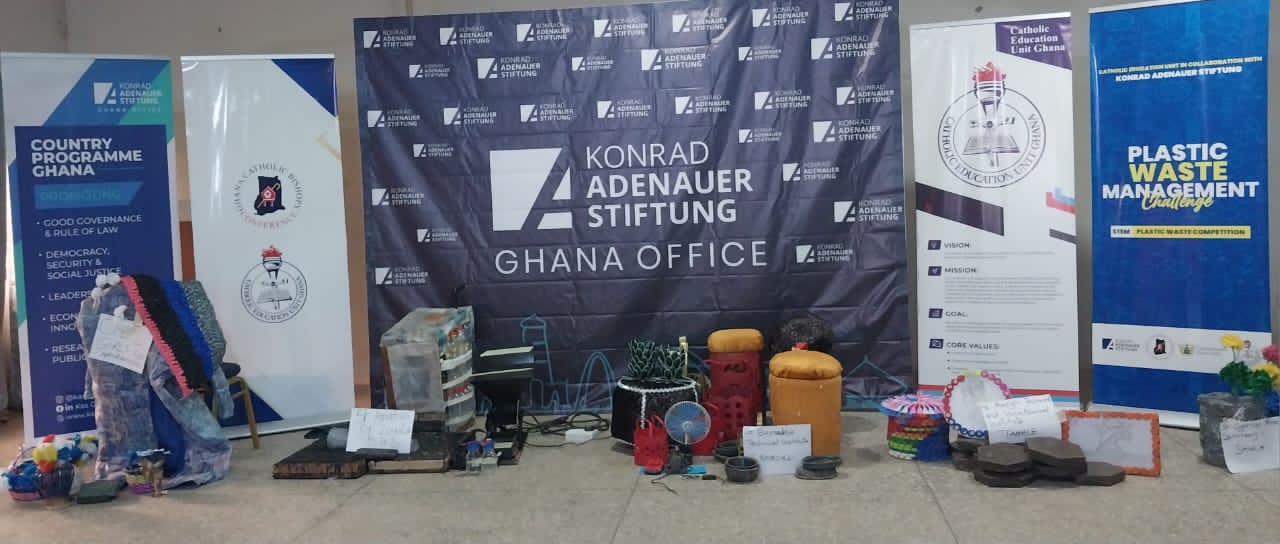
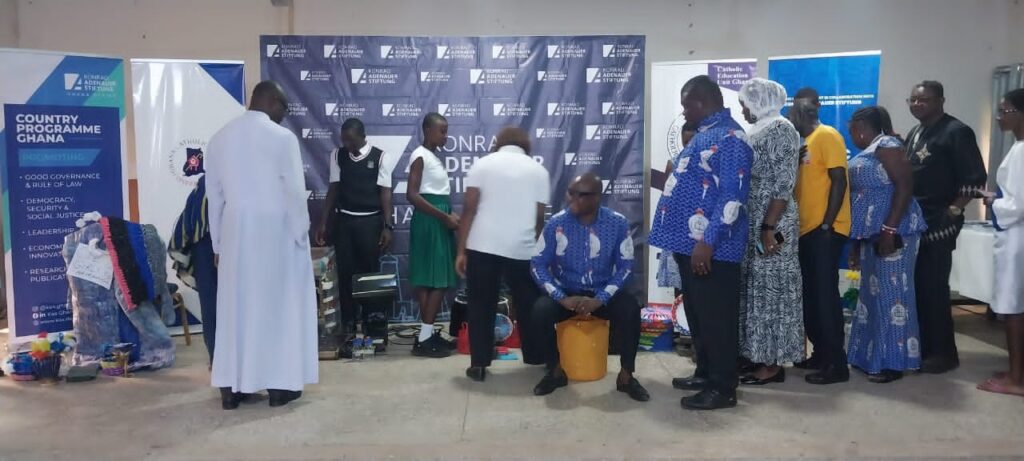
Five schools from the Northern, Savannah, Upper West and Upper East regions participated in the challenge by presenting practical projects designed to tackle the growing menace of plastic pollution in their communities.
At the end of the keenly contested competition, St. Ignatius of Loyola SHS, Lasie Tuolu, in the Upper West Region emerged champions, followed by Our Lady of Lourdes SHS, Navrongo, while St. Cyprian Minor Seminary SHS, Sawla, placed third. St. Benedict Technical Institute, Navrongo, and St. Mary’s Technical Institute, Tamale, finished fourth and fifth respectively.
Delivering the welcome address on behalf of the Bishop of Damongo Diocese, Rev. Fr. Sylvester Kuubetasuur representing Most Rev. Peter Paul Yelezuome Angkyier, described the competition as far more than an academic exercise, emphasizing that it was an investment in Ghana’s future through science, innovation and responsible environmental stewardship.
He reminded participants that care for the environment is deeply rooted in Christian teaching, citing Genesis 2:15, which calls on humanity to “till and keep” God’s creation, and Psalm 24:1, which affirms that the earth belongs to the Lord.
He noted that plastic pollution continues to threaten rivers, farmlands, wildlife and public health, particularly in Northern Ghana, where many communities depend on agriculture and clean water for their livelihoods.
Quoting Pope Francis encyclical Laudato Si’, the Bishop urged students to become ambassadors of environmental protection by developing practical innovations capable of reducing plastic waste, promoting recycling, creating employment opportunities and safeguarding the environment for future generations.
He further encouraged Catholic schools to champion environmental stewardship by reducing single-use plastics, promoting waste segregation and recycling, planting trees, organizing regular clean-up exercises and educating surrounding communities on responsible environmental practices.
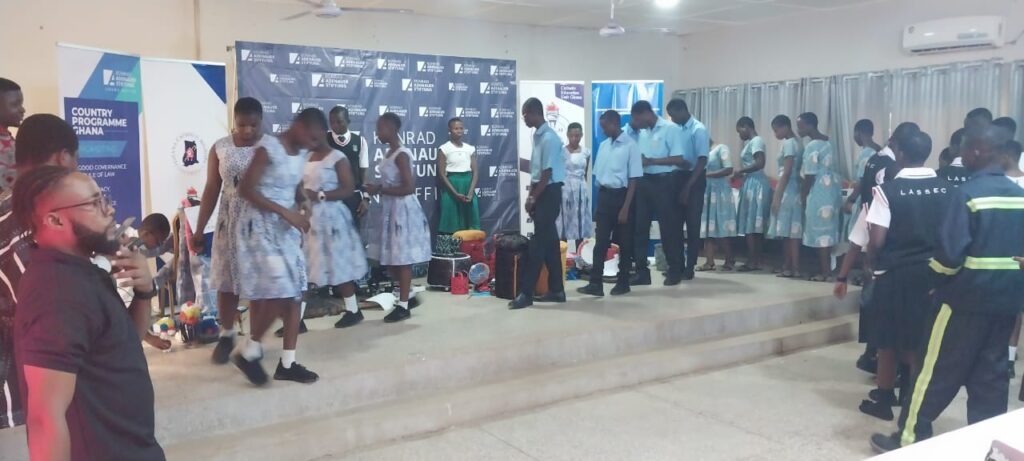
The National Manager of the Catholic Education Unit described the competition as a “battle of ideas” intended to empower students to develop practical STEM-based solutions to one of Ghana’s most pressing environmental challenges.
According to him, Ghana generates approximately 1.1 million metric tonnes of plastic waste annually, yet only about five percent is recycled. Citing Green Advocacy Ghana, he explained that nearly 85 percent of plastic waste is improperly disposed of, with an estimated 250,000 metric tonnes ending up in the Atlantic Ocean, threatening marine ecosystems and public health.
He warned that plastic pollution contributes significantly to flooding by blocking drainage systems and stressed that plastic materials can take between 100 and 1,000 years to decompose, making effective waste management an urgent national priority.
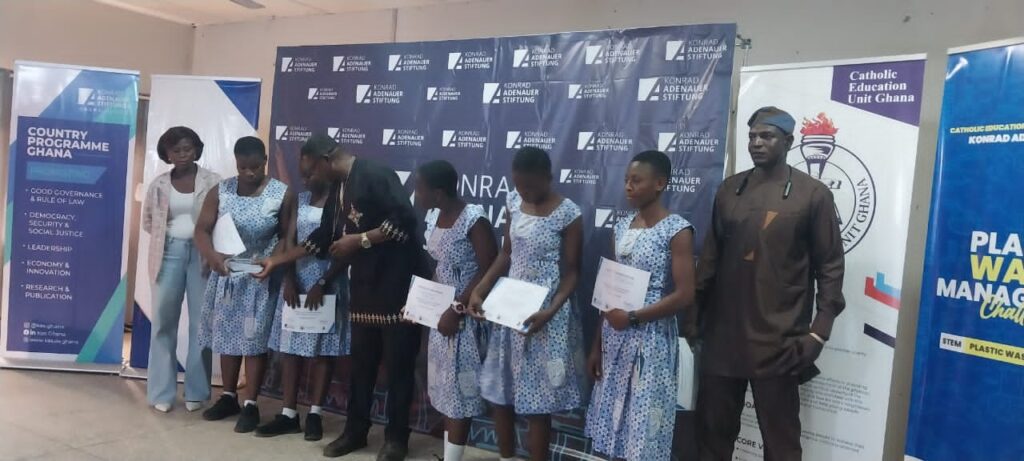
The Catholic Education Unit praised its long-standing partnership with Konrad Adenauer Stiftung, noting that the organization has sponsored the competition for three consecutive years. The collaboration, organizers said, aligns with the Catholic Church’s commitment to environmental care while strengthening students’ competencies in critical thinking, creativity, communication, collaboration and problem-solving under Ghana’s Common Core Curriculum.
Chairman of the event, Mr. John Kipo Kaara, commended all participating schools, teachers, judges and sponsors for contributing to the success of the programme. He urged participants to view the competition not simply as a contest for prizes but as the beginning of a lifelong commitment to protecting the environment.
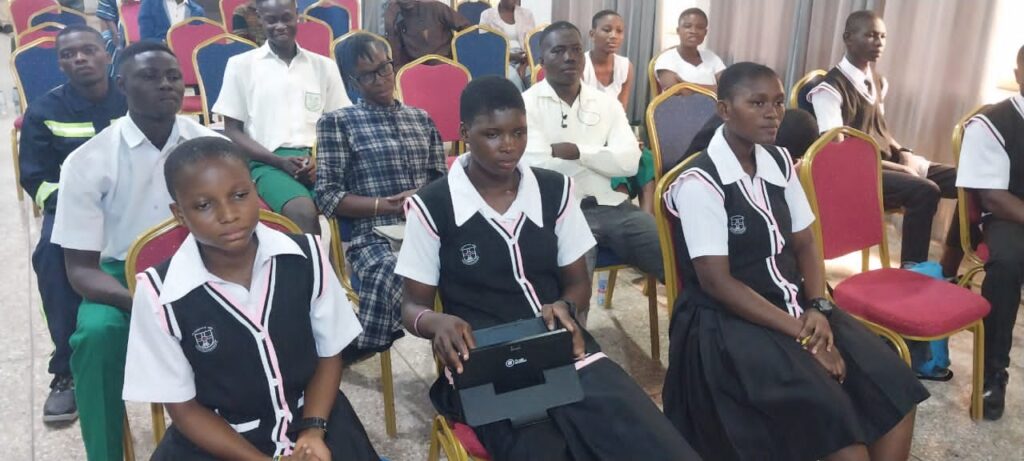
“The real competition begins outside this venue—in our homes, schools, churches and communities,” he said. “Let us reduce plastic waste, reuse where possible, recycle whenever we can and inspire others to do the same.”
He expressed hope that the competition would spark a lasting movement for environmental stewardship across schools and communities in Ghana.
The National STEM Plastic Waste Management Competition continues to provide a platform for young innovators to transform environmental challenges into opportunities by applying science, technology, engineering and mathematics to create sustainable solutions for plastic waste management while promoting a cleaner and healthier Ghana.
Source: Padfm.com.gh/Kumatey Gorden/0243531604