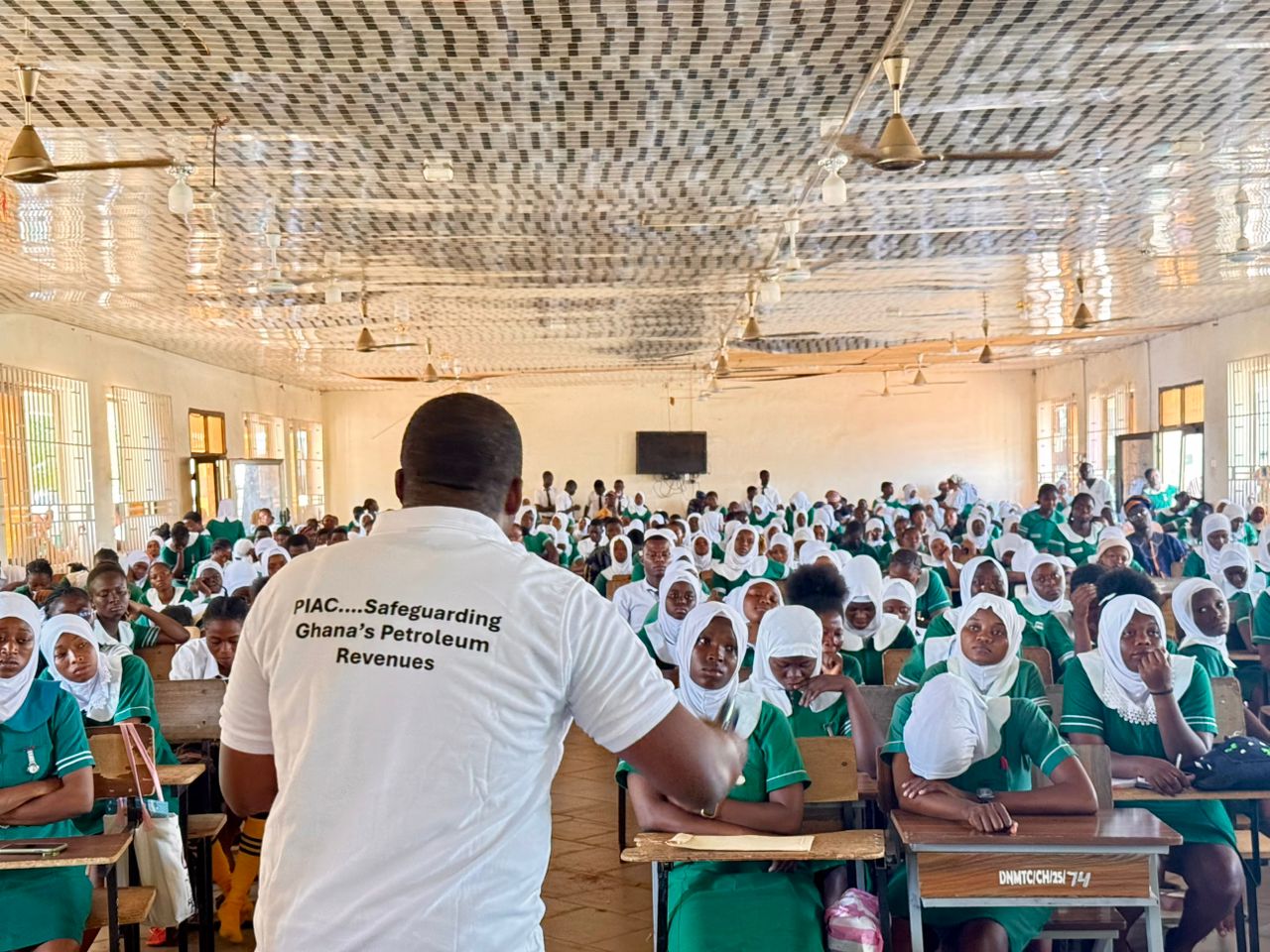

The Public Interest and Accountability Committee (PIAC) has stepped up efforts to deepen public understanding of Ghana’s petroleum revenue management, engaging students of the Damongo Nursing and Midwifery Training College (DNMTC) in a high-level forum on Wednesday, Thursday, 16th April, 2026.
The outreach programme, held as part of PIAC’s mandate to promote public debate and transparency, focused on the findings of the Committee’s 2025 Annual Report and drew active participation from the academic community.
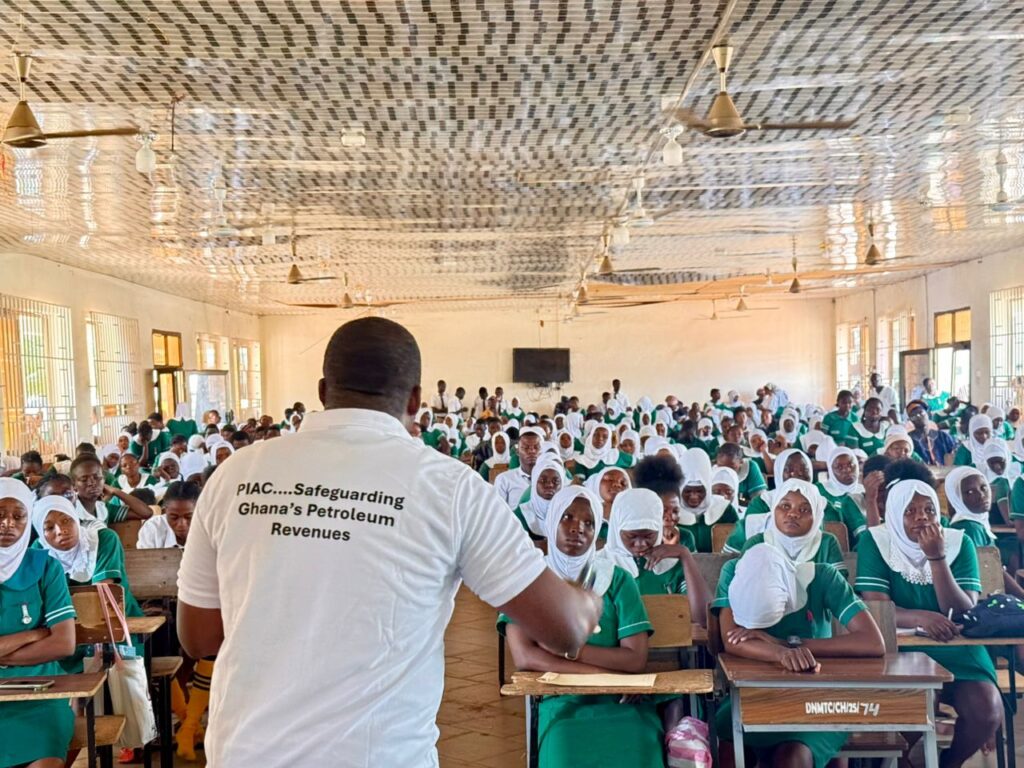
Vice-Chairperson of PIAC, Mr. Edward Yaw Afriyie, who led the delegation, delivered a detailed presentation on the Committee’s oversight role. He stressed PIAC’s independence and its critical responsibility in ensuring that petroleum revenues are properly managed for the benefit of all Ghanaians.
“Our duty is to the Ghanaian people,” Mr. Afriyie affirmed, underscoring the Committee’s commitment to accountability.
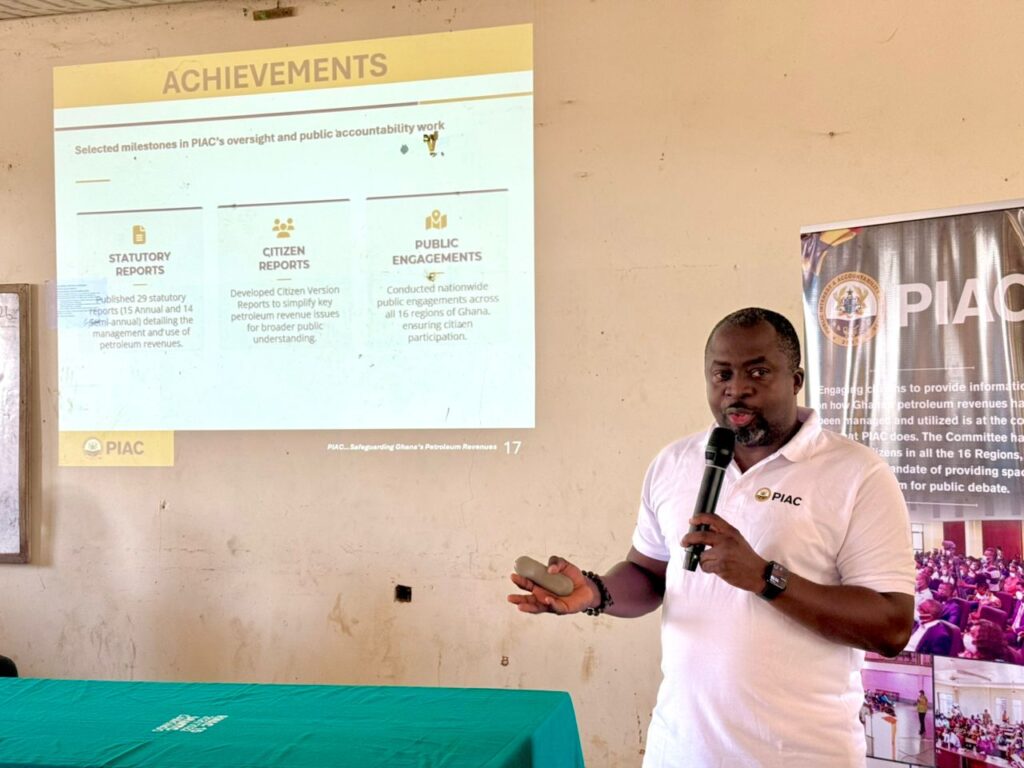
Executive Secretary, Mr. Isaac Dwamena, Esq., presented key highlights from the 2025 report, revealing a worrying trend in Ghana’s oil sector. According to the report, crude oil production has declined for six consecutive years, falling sharply from a peak of over 71 million barrels in 2019 to about 37 million barrels in 2025.
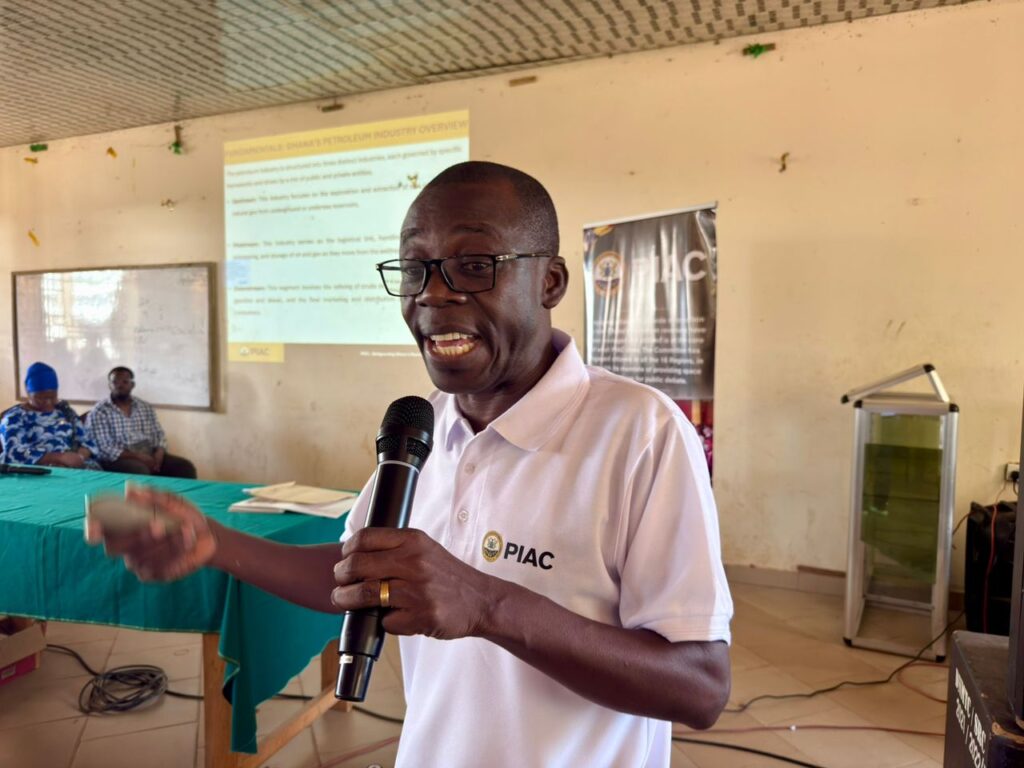
Mr. Dwamena attributed the persistent drop to multiple factors, including the aging of the country’s three main oil fields—Jubilee, TEN, and SGN alongside technical challenges, particularly at the TEN field, and a slowdown in new discoveries and upstream investment.
The forum sparked a lively question and answer session, with participants raising critical issues such as the need for prosecutorial powers for PIAC, the prioritization of petroleum revenues for the health sector, the status of Annual Budget Funding Amount (ABFA) projects in the Savannah Region, and the broader causes of the sustained production decline.
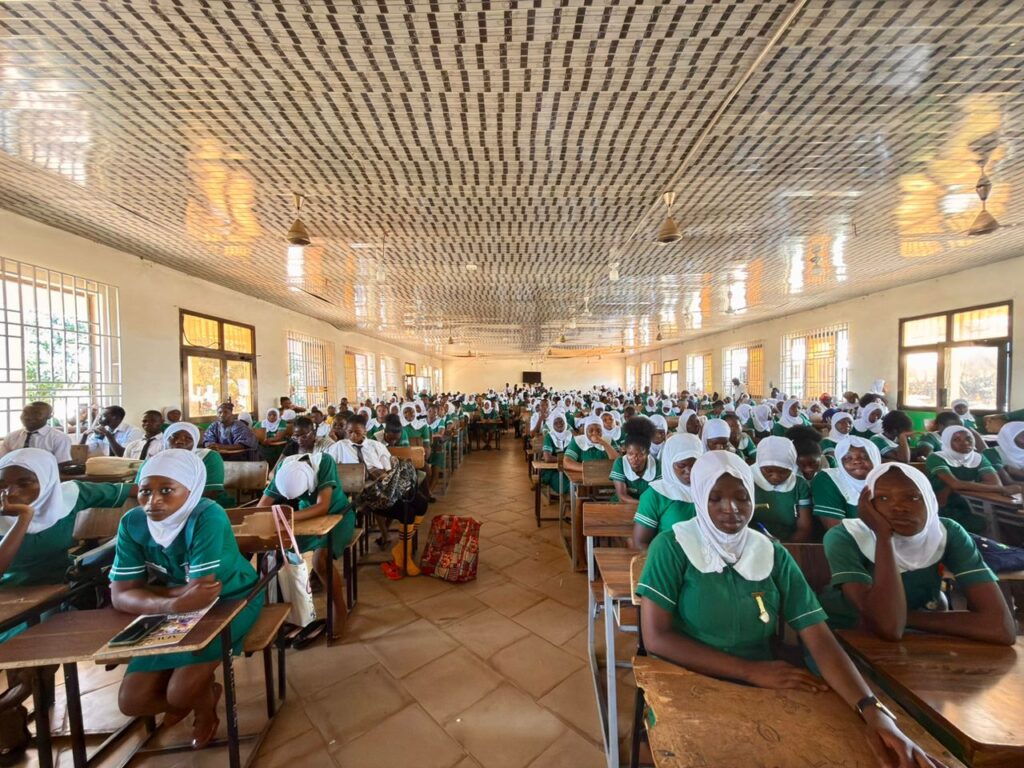
Principal of DNMTC, Hajia Shirley Issah, expressed appreciation to the PIAC team, noting that the engagement had equipped students with valuable knowledge to hold leaders accountable.
She emphasized that empowering future healthcare professionals with such insights strengthens civic responsibility and promotes transparency in national resource management.
The Damongo nursing training college engagement forms part of PIAC’s broader nationwide efforts to bring its findings closer to citizens and encourage informed public discourse on Ghana’s petroleum resources.
Source: Padfm.com.gh/Kumatey Gorden/0243531604