
23 September 2026
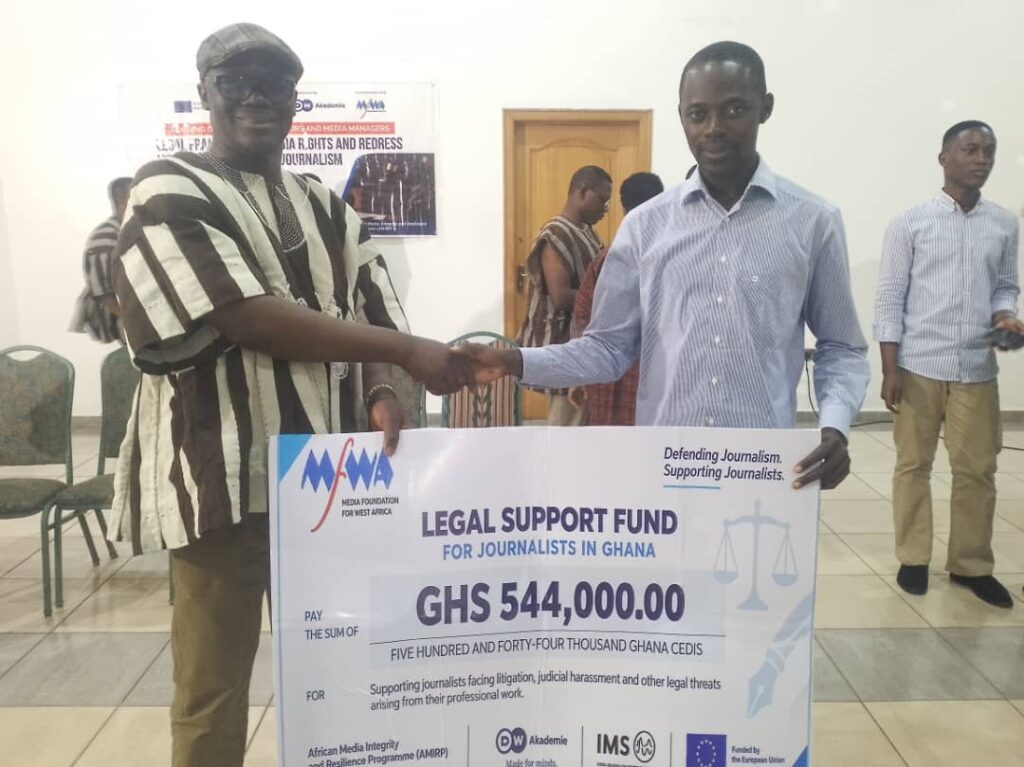
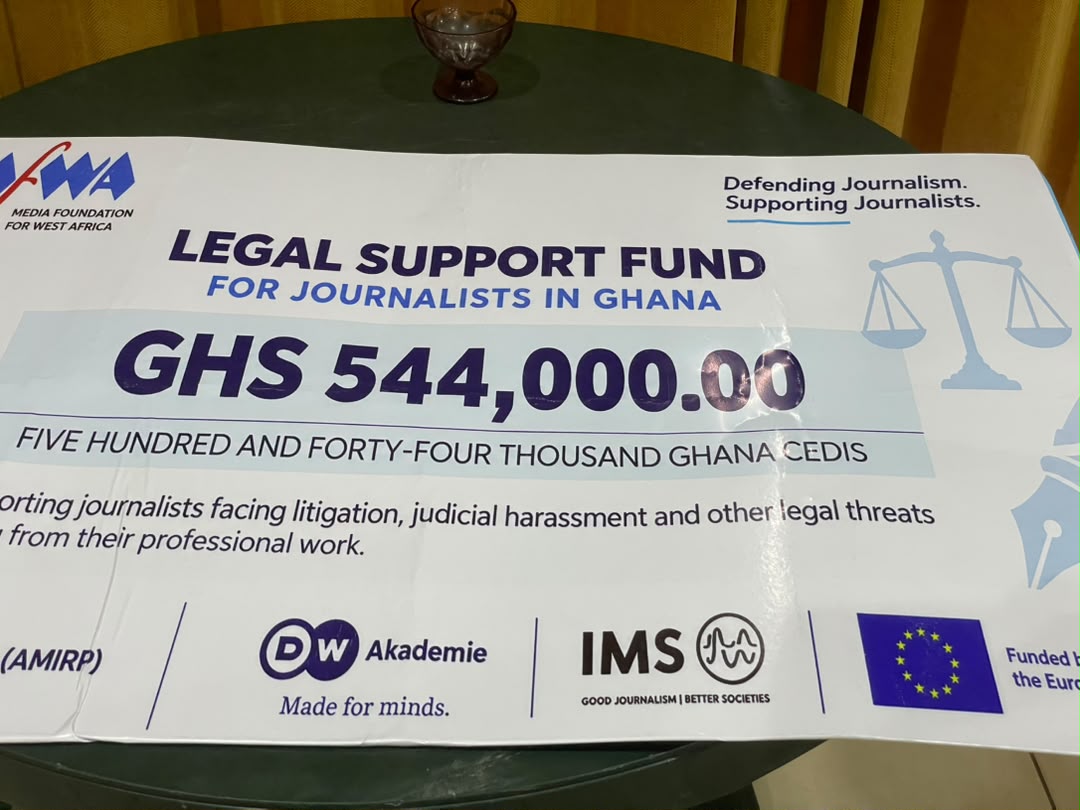
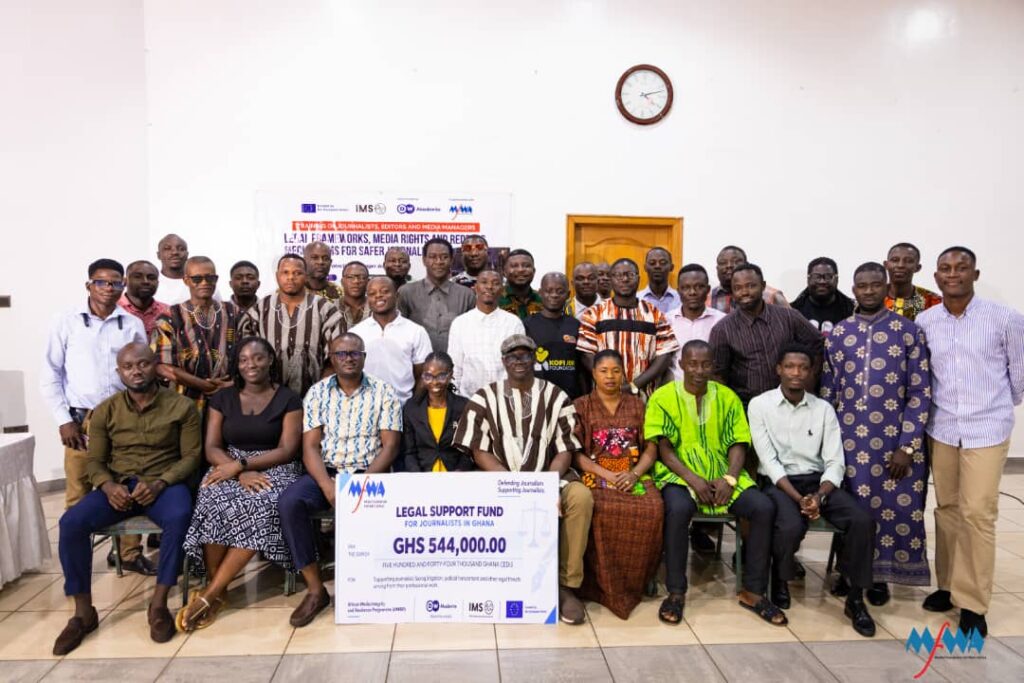
The Media Foundation for West Africa (MFWA) has secured GH¢544,000 to support journalists facing lawsuits in Ghana, under the African Media Integrity and Resilience Programme (AMIRP).
The programme is implemented by MFWA with support from International Media Support (IMS) and DW Akademie, and funded by the European Union.
The disclosure was made during a training programme for journalists from Ghana’s Northern sector, held at the Miklin Hotel in Kumasi from 21 to 25 September 2026, on legal frameworks, media rights and redress mechanisms for safe journalism.
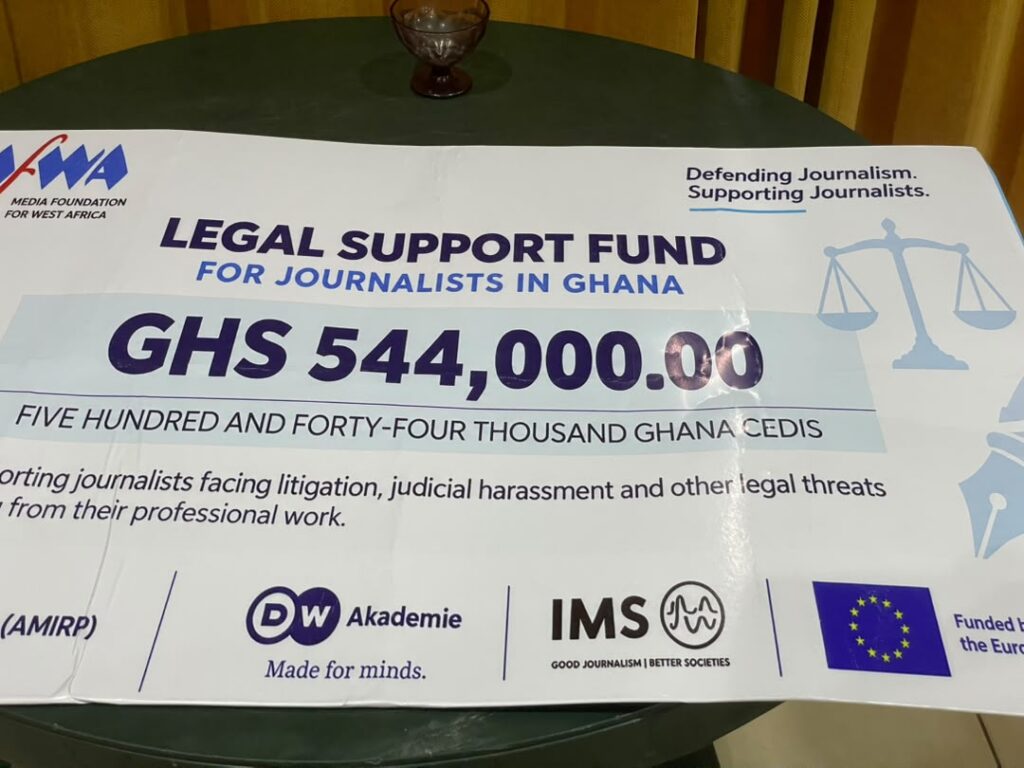
The project aims to strengthen journalists’ freedom and legal protection by deepening their knowledge of media law and expanding their access to legal support. Its objectives include equipping journalists with the skills to understand, prevent and manage legal risks; raising awareness of legal protection mechanisms and the Legal Support Fund; and strengthening collaboration among journalists, legal practitioners and media support organisations.
Lawsuits as intimidation, lawyer warns
Speaking at the training, journalist and lawyer Samson Lardy Anyenini said journalists are increasingly facing lawsuits arising from their professional work, though he described legal action — pursued within the law — as preferable to physical attacks on journalists.
He noted that individuals or institutions unhappy with media reports have lawful avenues open to them, including rejoinders and legal redress, given Ghana’s democratic system. He called MFWA’s intervention timely, citing the growing legal challenges facing journalists and media organisations.
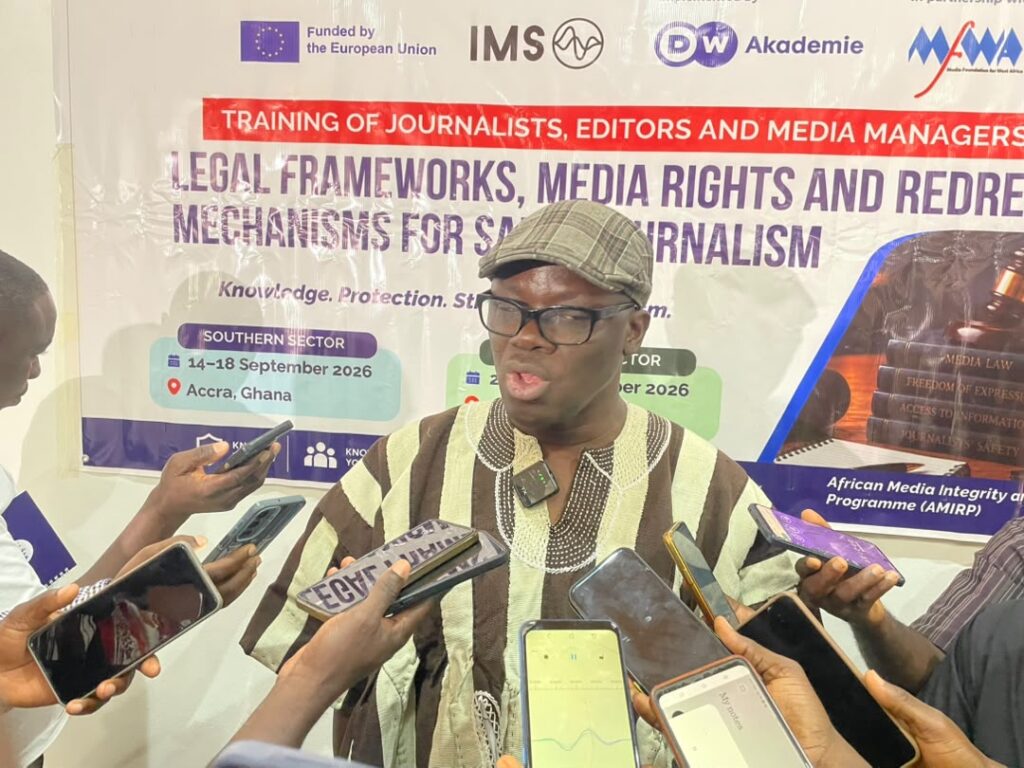
Anyenini also flagged the rise of Strategic Lawsuits Against Public Participation (SLAPPs), which he described as a tactic increasingly used to intimidate and silence the media. He said the financial strain already facing many media houses and individual journalists often left them ill-equipped to mount a defence in court, even when they had acted within the law.
He said the Legal Support Fund would give journalists greater access to legal assistance, allowing them to carry out their work with more confidence. Where journalists do make errors, he added, appropriate legal and professional mechanisms — not litigation used as intimidation — should be used to address them.
Curriculum review under way
Daniel Kwame Ampofo Agye, Programmes Manager for Media for Democracy and Good Governance, said the media provides a vital platform for citizens to express their views and participate in democratic governance — a role that requires media organisations and journalists to remain resilient in the face of legal and financial pressures.
He noted that many media houses lack the financial resources to pursue or defend legal cases, even when they believe they acted properly.
Agye also disclosed that MFWA is reviewing the media training curriculum used by journalism training institutions in Ghana, to ensure it reflects contemporary developments and practices. Proposals arising from the review will undergo further assessment before implementation.
The initiative is part of broader efforts by MFWA and its partners to strengthen the resilience of Ghana’s media, deepen journalists’ understanding of the legal environment they operate in, and improve access to legal protection and redress.
Main changes: tightened the lede, fixed grammar/agreement issues throughout, added subheadings for readability, converted the awkward “This is a new form of technique…” passage into clean reported speech, and trimmed repetition.