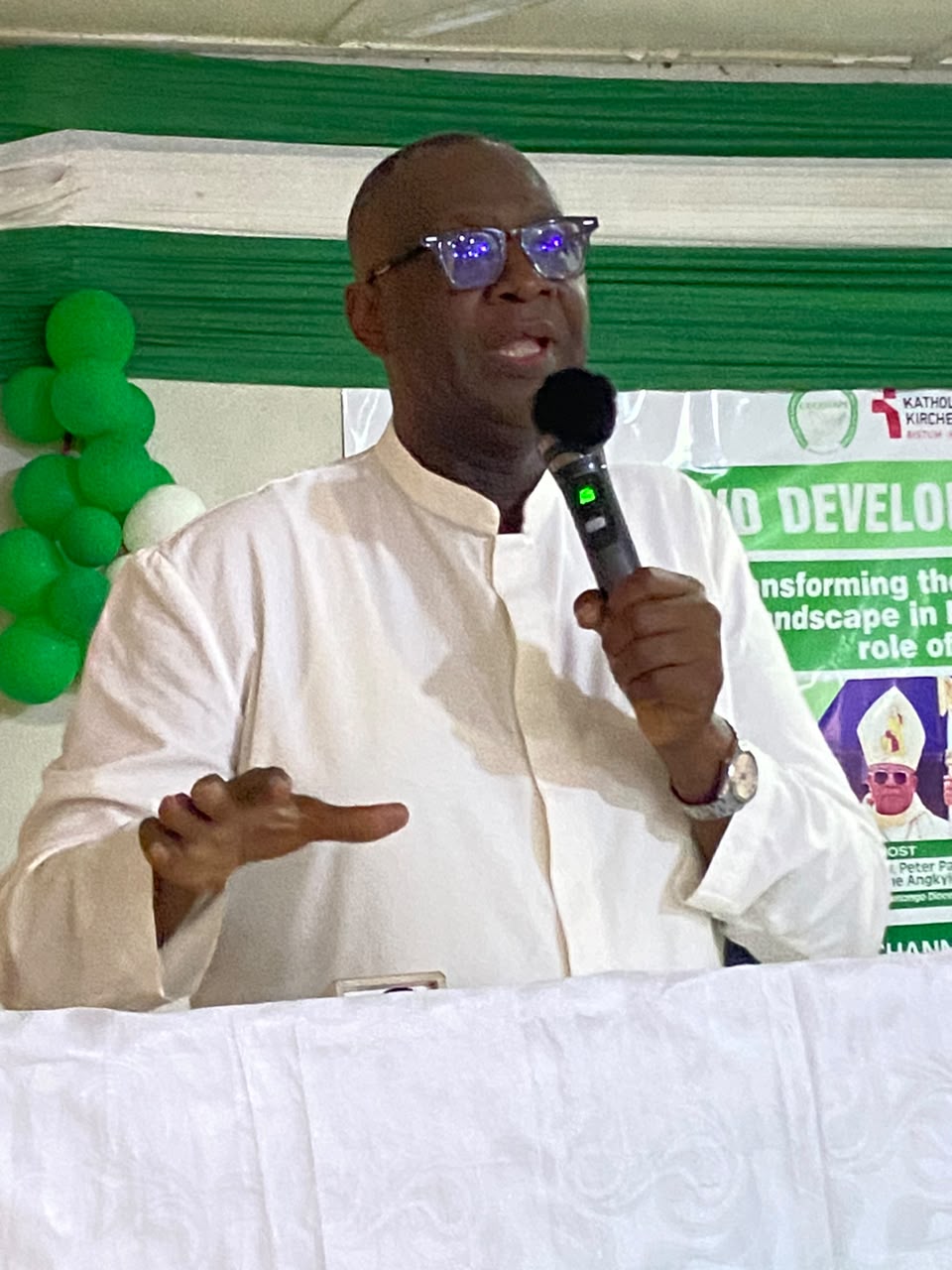

The Country Director of COGINTA-Ghana, Rev. Fr. Clement Aapengnuo (PhD), has called for renewed commitment to peacebuilding in Northern Ghana, stressing that sustainable development can only thrive where peace prevails.
Speaking as the guest speaker at the opening session of the 4th Peace and Development Conference organised by the Centre for Conflict Transformation and Peace Studies (CECOTAPS) on Wednesday July 29, Rev. Fr. Aapengnuo delivered a compelling presentation titled “The Story of CECOTAPS” under the conference theme, “Transforming the Peace and Security Landscape in Northern Ghana: The Role of the Centre for Conflict Transformation and Peace Studies.”
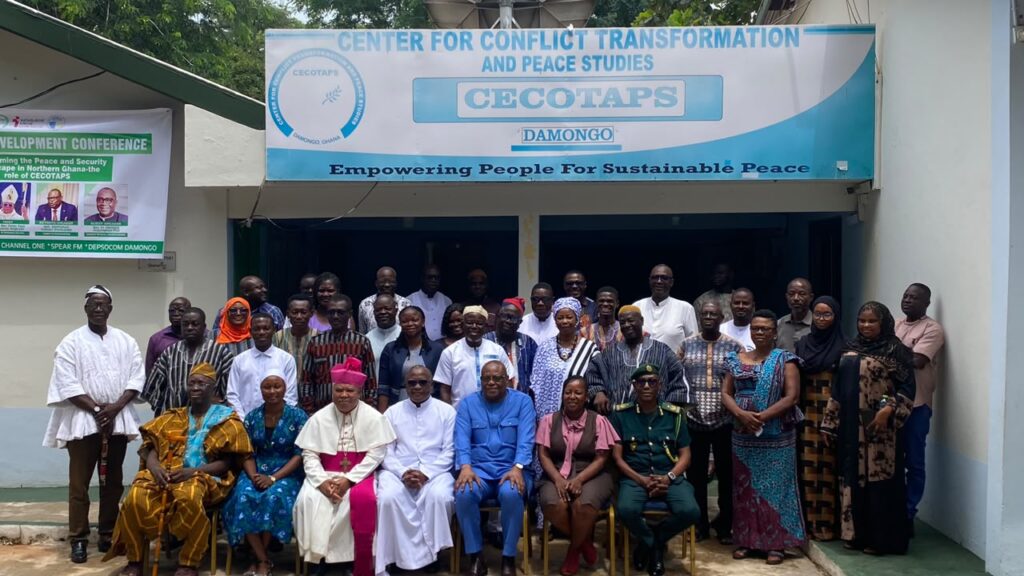
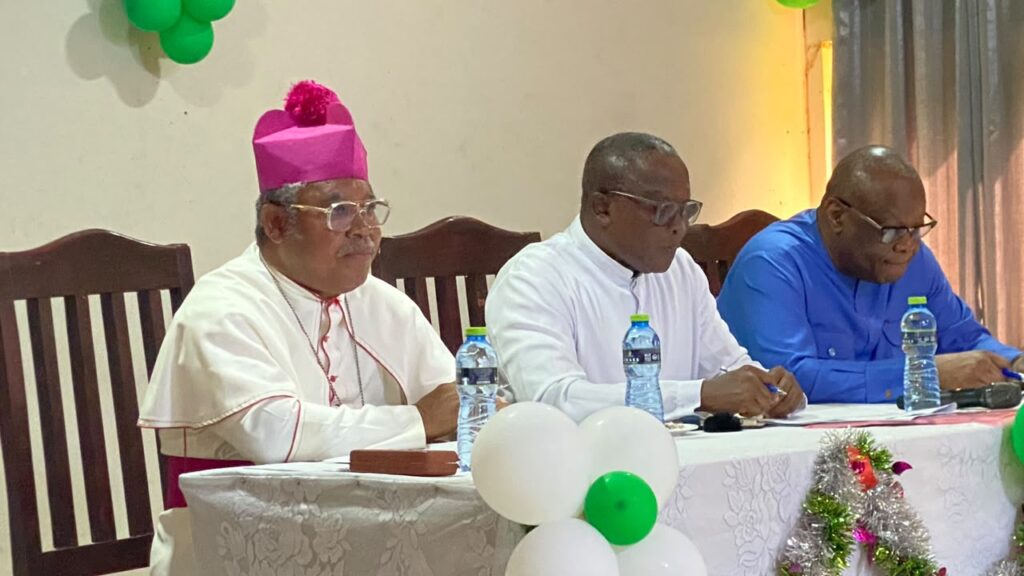
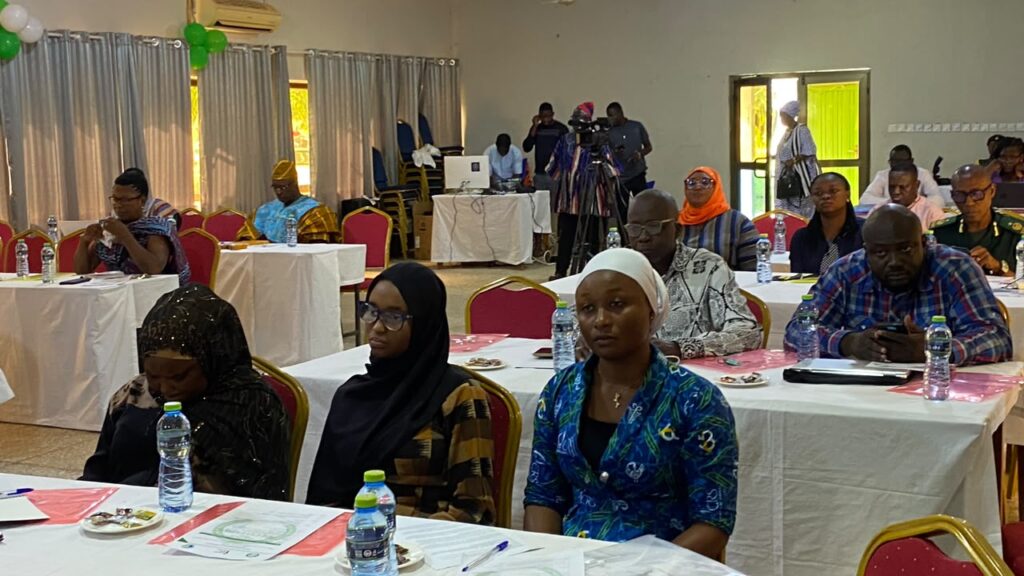
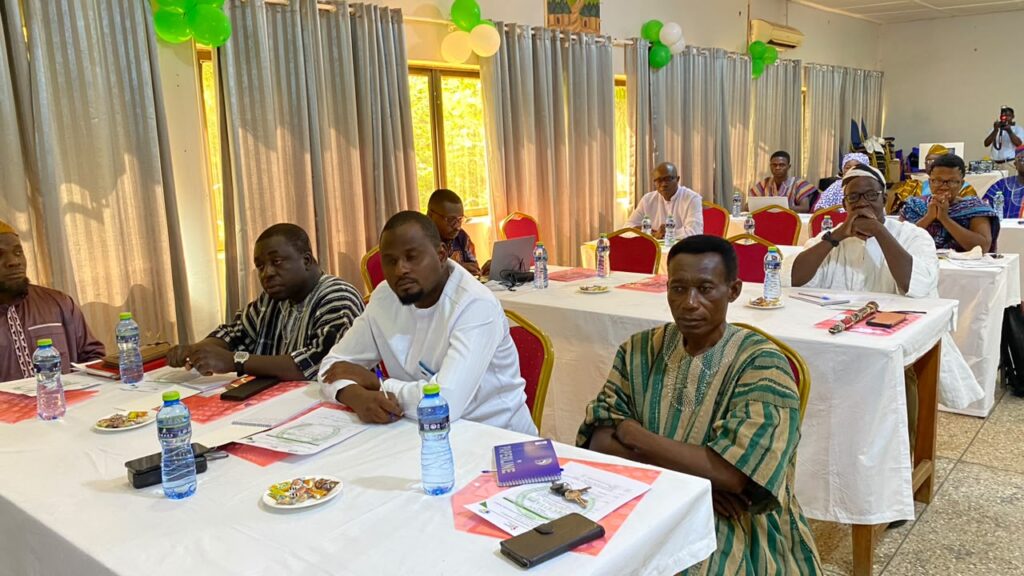
Addressing an audience of the Catholic Bishop of Damongo, security officials, representatives of the National Peace Council, traditional rulers, religious leaders, civil society organisations, and peace practitioners, Rev. Fr. Aapengnuo reflected on the Centre’s remarkable 25-year journey in transforming conflict into opportunities for dialogue, reconciliation, and development.
He recounted how CECOTAPS was born out of one of the darkest chapters in Northern Ghana’s history, when violent ethnic conflicts ravaged communities between the 1980s and early 2000s. He noted that between 1980 and 2002, at least 26 documented ethnic conflicts occurred across the northern regions, with the devastating 1994/95 conflict claiming over 2,000 lives, displacing more than 200,000 people, and destroying 441 communities.
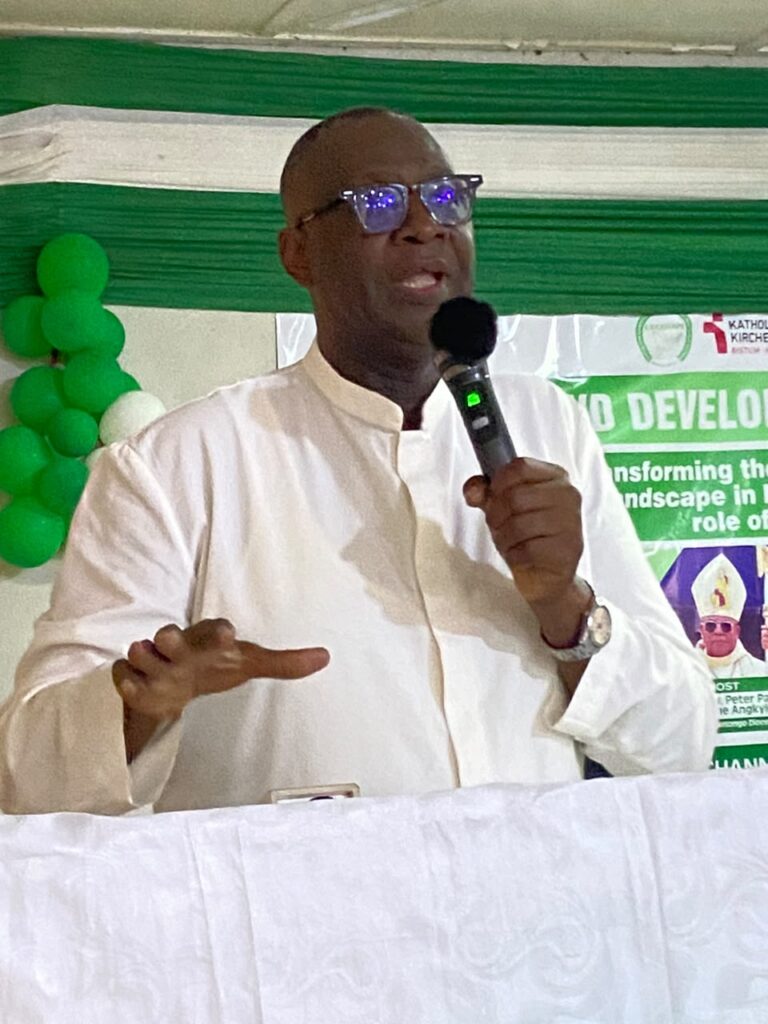
According to him, those tragic events prompted the Catholic Church to take decisive action.
Rev. Fr. Aapengnuo explained that shortly after the establishment of the Catholic Diocese of Damongo in 1995, the Diocese commissioned a socio-economic and pastoral survey in collaboration with the University of Ghana and ActionAid. The findings revealed that meaningful development and evangelisation could not take place without peace, leading to the establishment of the Unity Centre in Damongo as the foundation for organised peacebuilding efforts.
He traced the evolution of the initiative from the Unity Centre to the Northern Ghana Peacebuilding and Conflict Transformation Project through a partnership between the Catholic Diocese of Damongo and Catholic Relief Services (CRS) in 1999. That project later evolved into CECOTAPS, becoming Ghana’s pioneering institution dedicated to conflict transformation and peace studies.
Rev. Fr. Aapengnuo highlighted the Centre’s significant achievements over the past two and a half decades, noting that it has trained more than 6,000 traditional leaders, local government officials, women, youth, and development workers in peacebuilding and conflict resolution. He said CECOTAPS has intervened in several major chieftaincy disputes, including conflicts in Bawku, Dagbon, Bimbilla, Wa, Yendi, Daboya, Tamale and Zaare, while also contributing to the establishment of the Ghana Network for Peacebuilding (WANEP-Ghana) and influencing the creation of the National Peace Council.
He described the Church’s contribution to peacebuilding as unique, explaining that its interventions are rooted in the belief that every human being possesses inherent dignity and that peace is built through right relationships rather than the mere absence of violence.
“The Church came to peacebuilding not because of donor funding or political interests, but because it regarded peace as a pastoral responsibility and a prerequisite for development,” he stated.
Rev. Fr. Aapengnuo also acknowledged the challenges CECOTAPS has encountered over the years, including dependence on project-based funding, governance constraints, staff turnover at Satellite Peace Centres, and the difficulty of translating individual transformation into wider community change. However, he described these as natural growing pains of an institution that pioneered faith-based peacebuilding in Ghana.
Looking ahead, he urged the Church and its partners to strengthen CECOTAPS through autonomous governance, diversified funding, stronger partnerships with traditional authorities, security agencies, civil society organisations, and the private sector, while integrating peacebuilding into broader development programmes.
He also appealed to all stakeholders to preserve the Church’s moral authority by keeping it above political and ethnic interests.
Rev. Fr. Aapengnuo concluded by reminding participants that peace is not a one-time project but a continuous process requiring commitment from every generation.
Reflecting on the Centre’s 25-year legacy, he said what began as a modest peace resource room in Damongo has grown into a nationally recognised institution whose impact can be seen in Ghana’s peace architecture and in the countless communities that have embraced dialogue over violence.
He urged participants to carry forward CECOTAPS’ founding conviction that every individual, regardless of ethnicity or background, deserves dignity, justice, and a shared commitment to lasting peace.
Source: Padfm.com.gh/Kumatey Gorden/0243531604