

Abdulai Zulkaninu
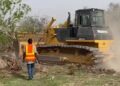
The Savannah Regional Minister, Hon. Salisu Be-Awuribe, has described the government’s 24-hour economy markets as legacy projects that will serve generations to come. This follows the signing of contract documents with the seven Municipal and District Chief Executives in the Savannah Region to commence the construction of the markets across the region.
The initiative forms part of President John Dramani Mahama’s commitment to establish a 24-hour economy nationwide, aimed at creating jobs and improving livelihoods. The 24-hour economy market initiative is expected to boost local commerce, enhance economic activity, and contribute significantly to Savannah region’s development.

The brief signing ceremony was held at the Savannah Regional Coordinating Council (SRCC) on Thursday, April 2, 2026, and was attended by traditional leaders, consultants, contractors, and administrators.
Hon. Be-Awuribe explained that the markets have been categorized into four groups—Category 1, Category 2, Category 3, and Category 4—based on scale and design.
Category 1 projects have been awarded to the Bole District Assembly, Central Gonja District, and West Gonja Municipal Assembly. He noted that these areas were selected due to their strategic importance: Damongo, as the regional capital; Bole, as a key commercial hub with international market appeal; and Buipe, as a major commercial center with one of the region’s busiest periodic markets.
The remaining assemblies—East Gonja, North Gonja, Sawla-Tuna-Kalba, and North East Gonja—have also been allocated appropriate market categories to maximize regional development outcomes.
Describing the initiative as a major milestone for the Savannah Region, the Minister emphasized the need for both speed and quality in execution. He stressed that the projects must stand the test of time, stating that “future generations should inherit durable structures that continue to serve their intended purpose”.
He added that consultants and contractors will be closely monitored to ensure high standards are maintained.
Hon. Be-Awuribe cautioned that any contractor who fails to meet specifications or quality standards risks having their contract terminated.
He, however, assured contractors of government support, noting that funds will be made available promptly to ease financial constraints and facilitate timely completion of the projects.
He further disclosed that contractors have committed, through signed agreements, to continue work regardless of payment delays, demonstrating their readiness to deliver on schedule.
Addressing concerns about compensation for affected properties, the Minister clarified that there will be no direct financial compensation. However, traditional authorities have pledged to provide alternative lands to support individuals whose structures may be impacted by the projects.
In the North Gonja District, two communities—Daboya and Mankarigu—have been earmarked for market construction. The Minister revealed that while Daboya is progressing, the Mankarigu project remains open for bidding after no contractor submitted a proposal during the initial process. He assured residents that steps are being taken to secure a contractor to ensure timely execution.


.